
Scaling agile
Swisscom has come a long way since 2015 when they started transforming their IT and business units into a scaled agile organisation. They used the well-known Scaled Agile Framework (SAFe), which specifies many organisational and procedural points while also leaving flexibility for unique elements to the organisation and its culture.
However, this flexibility meant that, over time, standard practices came to be seen as best practices. Instead of referring to the framework, everyone tended to mimic patterns picked up somewhere…not always with the best results.
The challenges
After witnessing this development, the data and network analytics unit approached us in 2018 and asked for support. Because they faced a range of hurdles with regards to their scaled agile working mode, they started asking us a range of questions, including:
What’s essential to consider when writing features? What about when writing PI objectives?
How can features be sliced in a better way?
How can we profit more from Inspect & Adapt exchanges as a collective learning experience?
How can we make our meetings and agile ceremonies more effective?
The results
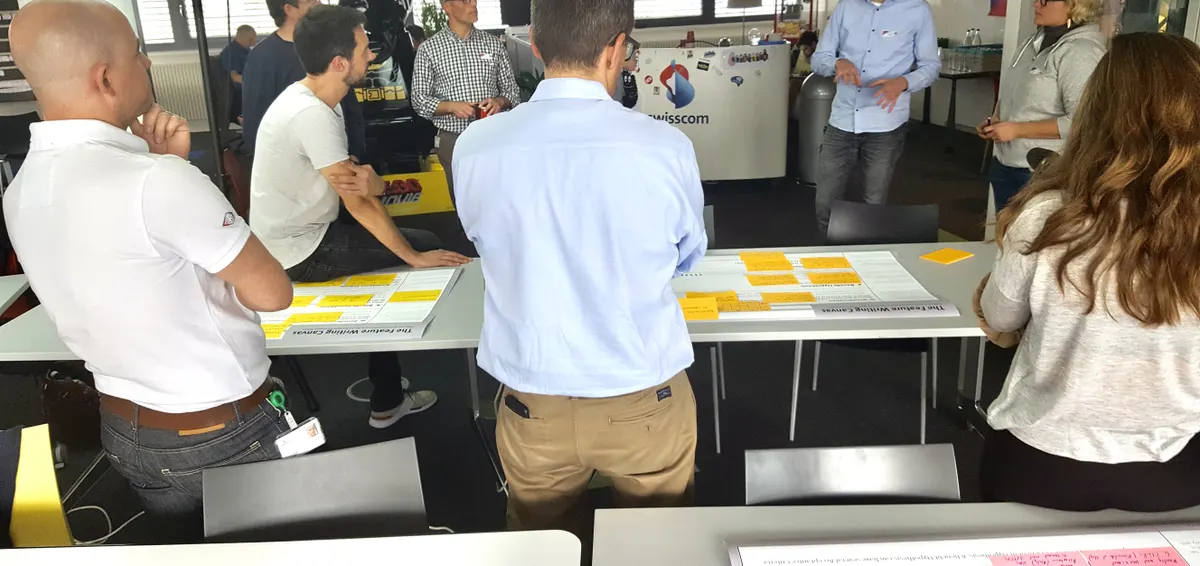
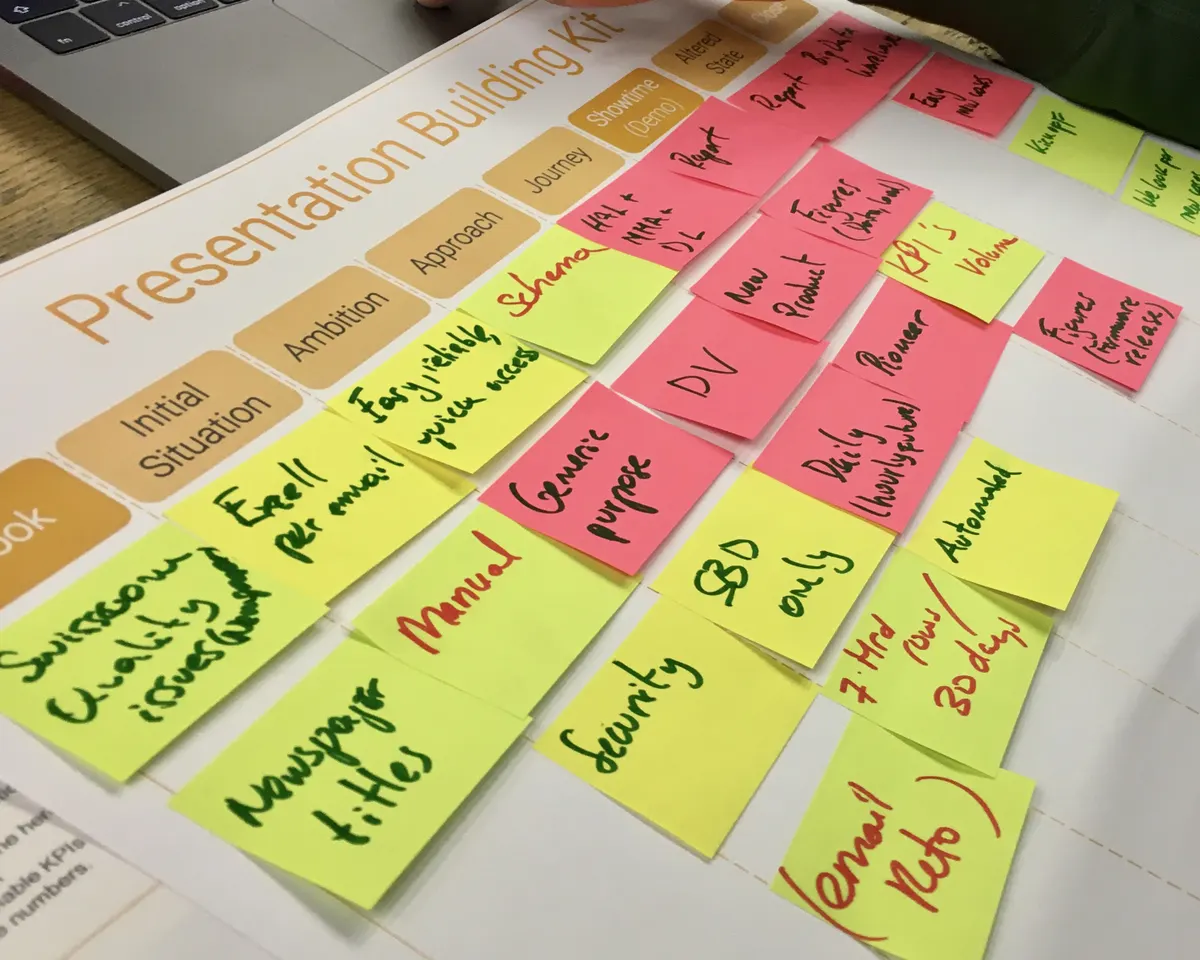
For each challenge given, we always bring together different viewpoints by involving people with different roles, such as Software- and Solution Architects, Product Managers, Product Owners, or Agile Coaches. We also learn about the challenges through interviews and attending meetings and agile ceremonies such as Scrum of Scrum, Inspect & Adapt or PO-Synch. With these viewpoints and knowledge, we’ve been able to support Swisscom by co-creating an array of different tools and training formats that help them scale their agile methods of working more effectively. The following results have been created in the cooperation so far:
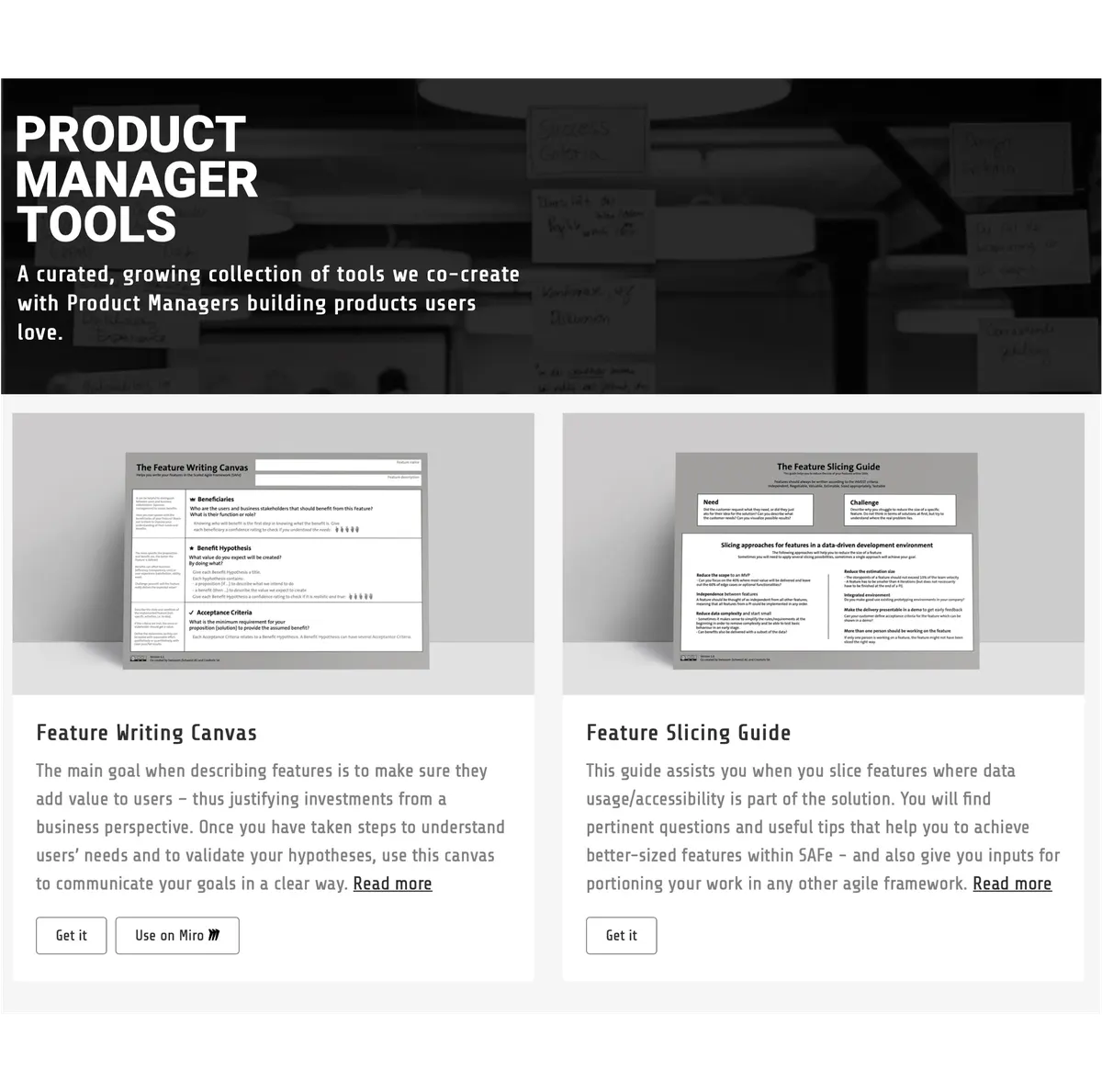
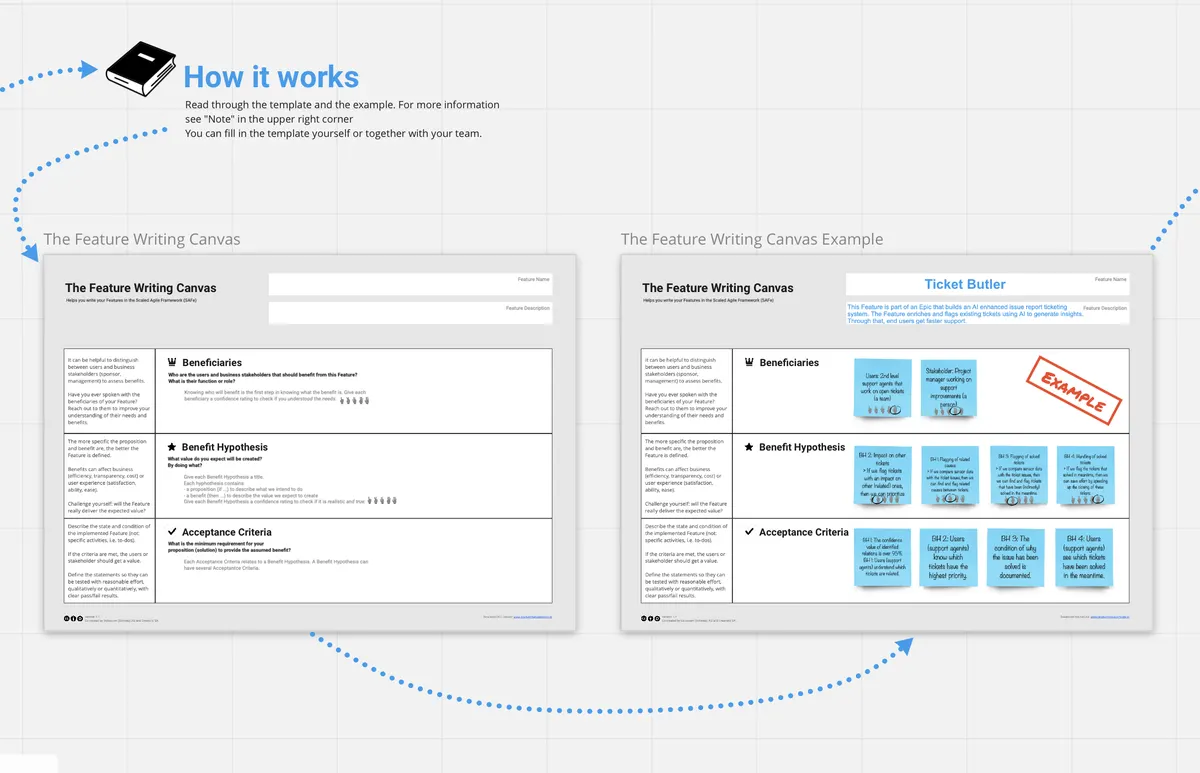
A Feature Writing Canvas makes sure that Features add value to users.
A Feature Slicing Guide helps users to achieve better-sized features.
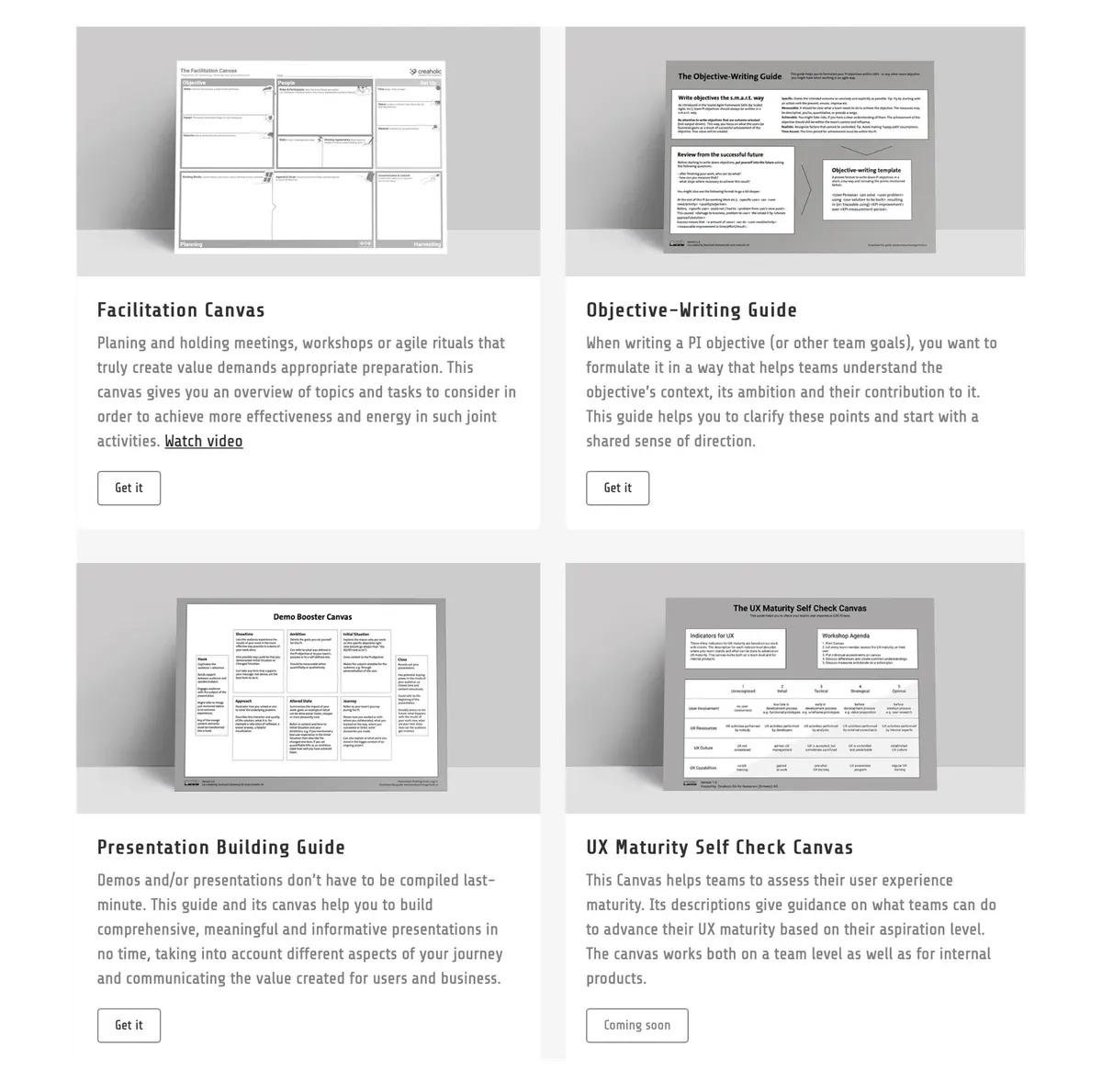
The Objective-Writing Guide gives a shared (team) sense of direction by clarifying an objective’s context, its ambition, and your contribution to it.
A Presentation Building Guide & Canvas guides users in quickly building up comprehensive (PI) presentations and communicating the value created for users and businesses.
The Facilitator Canvas assembles topics and tasks to consider to achieve more effectiveness and energy in joint activities, for example, meetings, workshops or agile ceremonies.
A UX Maturity Self Check Canvas helps teams assess their user experience maturity.
Open access distribution
When we saw that many of these tools quickly gained interest within and outside of Swisscom, we decided to make them available for the worldwide agile community by putting them on the dedicated website www.productmanagertools.io.
Since its go-live, this growing collection of tools has been used by companies worldwide. Some tools have also been featured on online collaborative platforms.

Do you find it challenging to scale your new agile ways of working?
Are you inspired by this case study and interested in discussing a similar collaboration?If so, then reach out to one of our experts!