
A more sustainable disposable cup
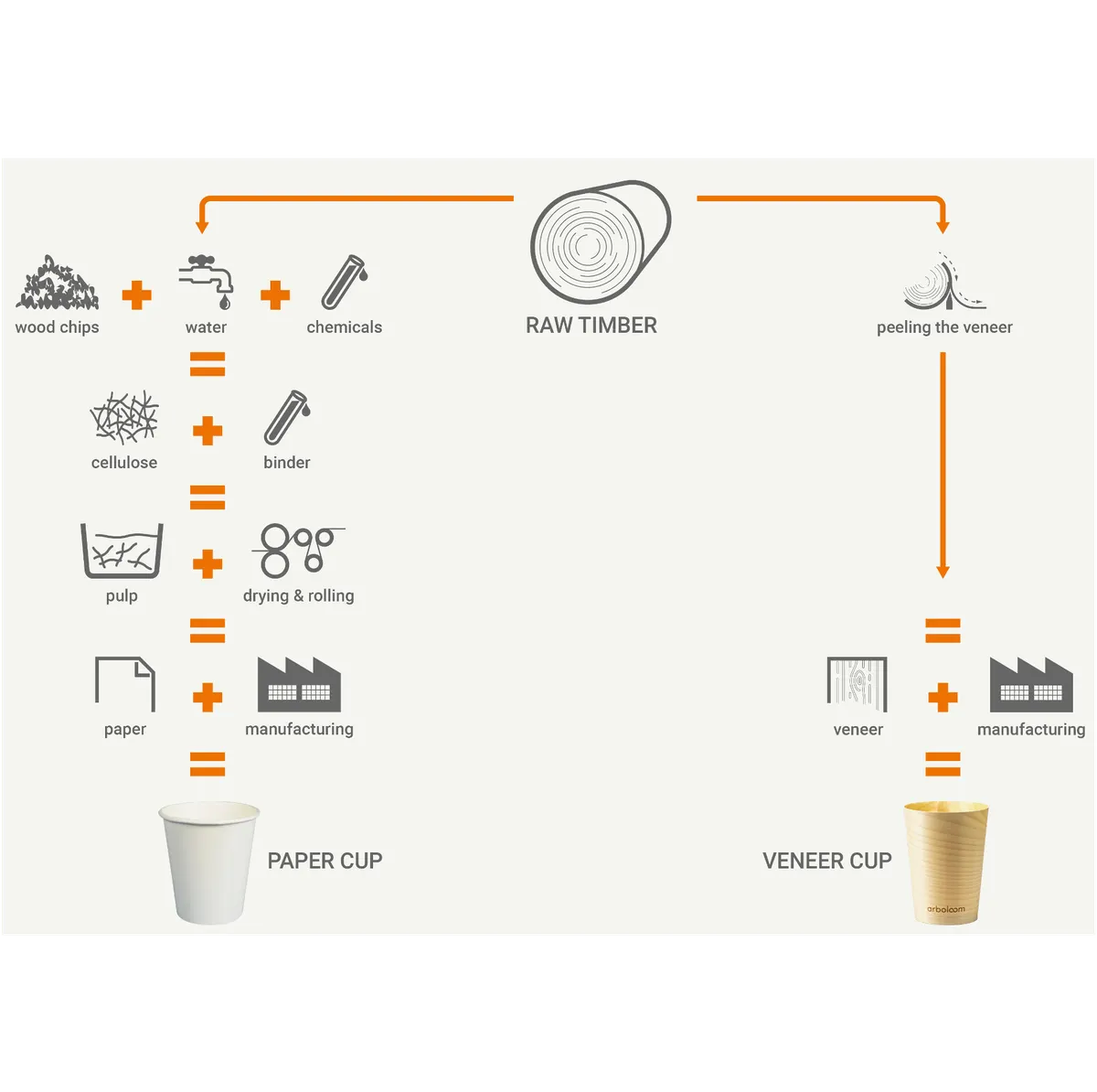
Paper is mostly made from wood, so far so good, if sourced appropriately, wood is a sustainable resource. However, the process of transforming wood into paper involves multiple steps which include the chipping of the wood, separating of the cellulose fibres, adding bleach and water, and eventually forming the paper from the resulting pulp.
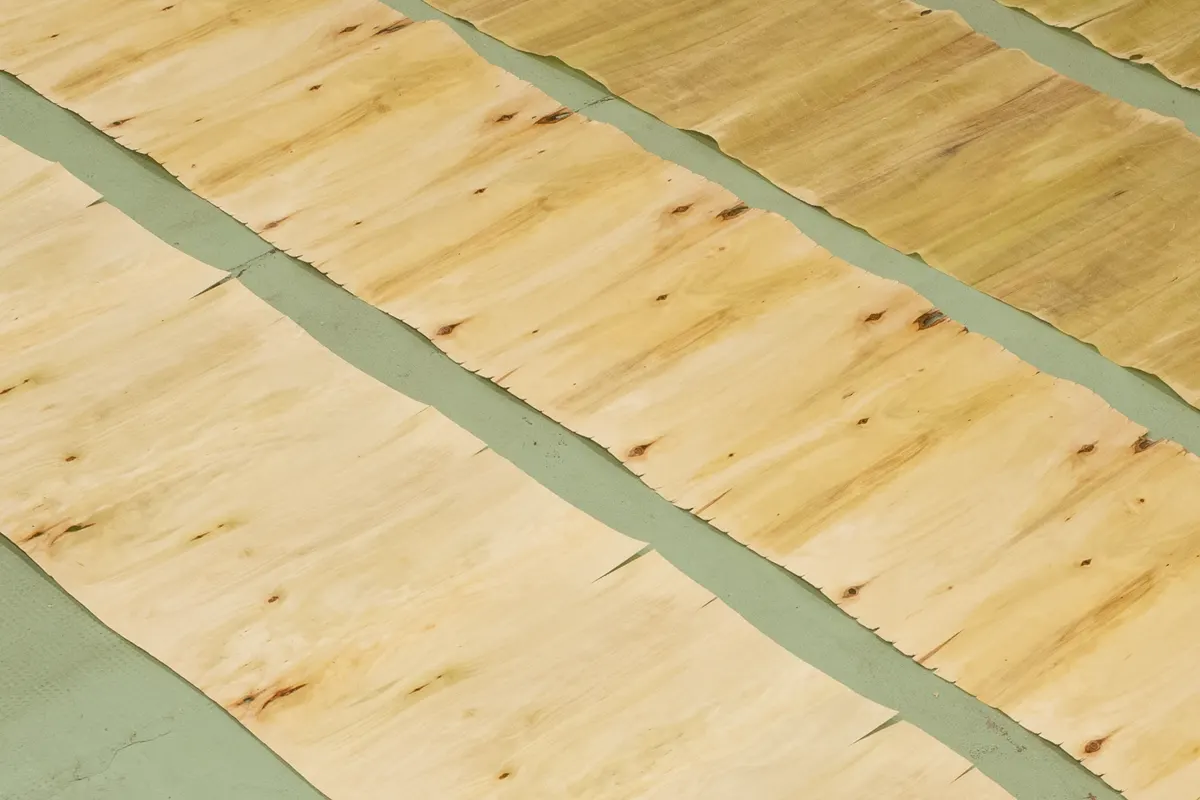
Which led us to question whether, for specific applications, it would be more sustainable to utilise raw unprocessed wood and avoid all the steps in the paper making process. We knew that it’s possible to peel timber, to create a veneer which is about the same thickness as cardboard. So, we started looking for applications and, in the process, discovered that approximately 500 billion paper cups are produced each year.
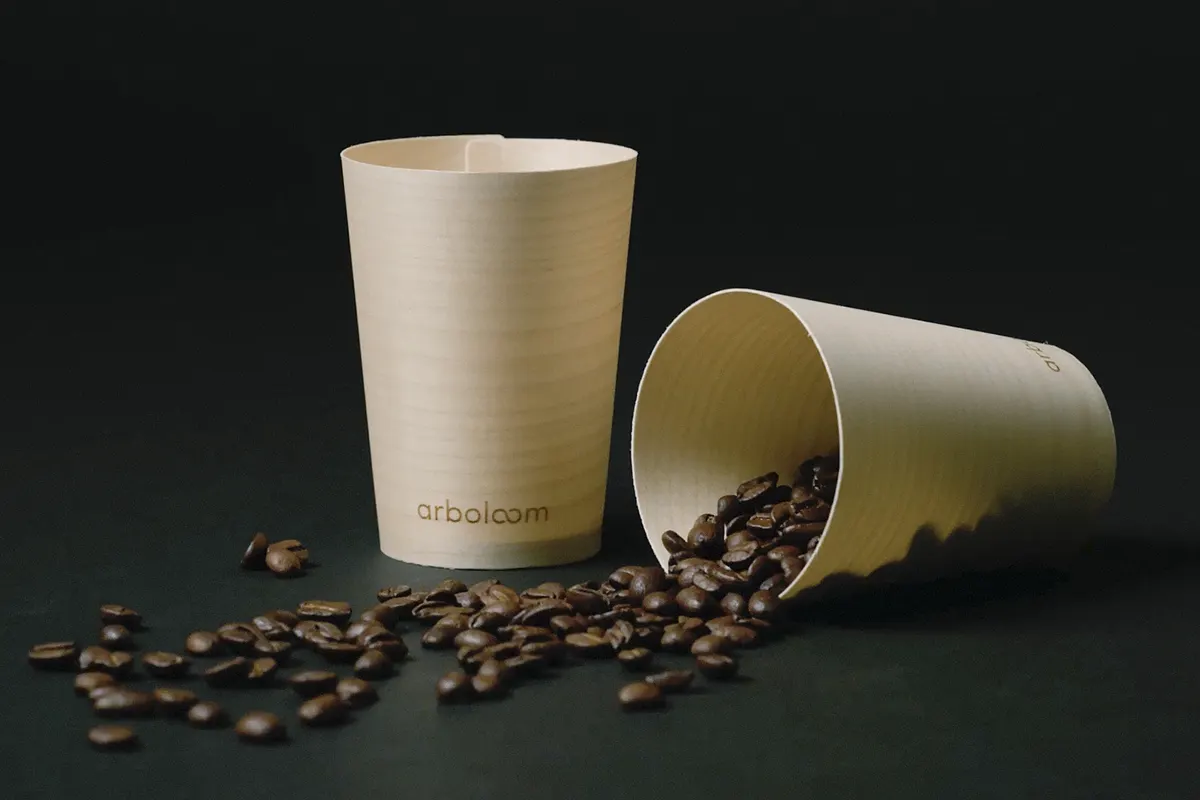
We had our first goal, to design and develop a more sustainable disposable cup made from a wood veneer and with minimum production processes between the peeling of the timber and the final product. To validate this approach, we did further research and found that one cubic metre of wood grows every three seconds in Switzerland. Once it’s peeled, it equates to a piece of veneer 1 km long and 1 m wide - enough material to produce 20,000 3dl cups … every 3 seconds.
Prototyping, testing, and exploring to find the solution
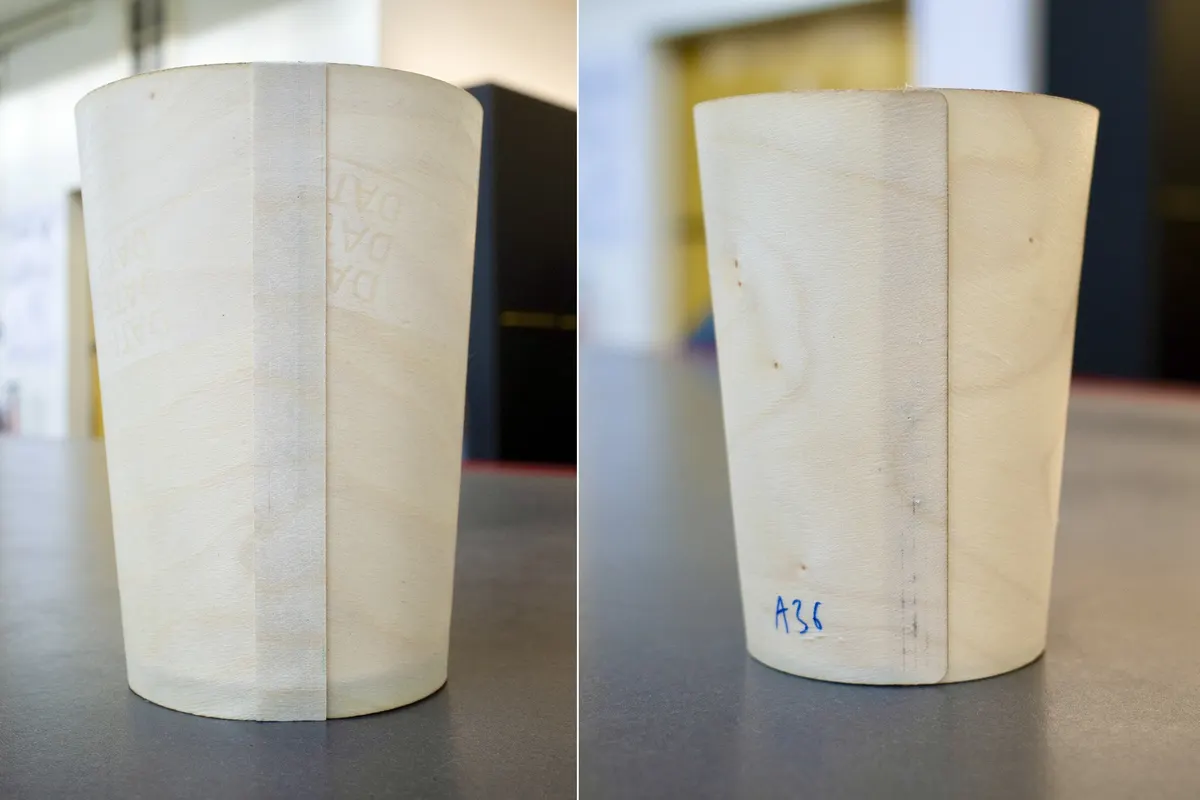
We started prototyping, hoping the inherent properties of the wood would provide sufficient water tightness for at least 24 hours. Unfortunately, it didn’t, veneer like any natural material has a diverse structure, and with a thickness of just 0.5mm the irregularities weren’t compatible with being watertight.
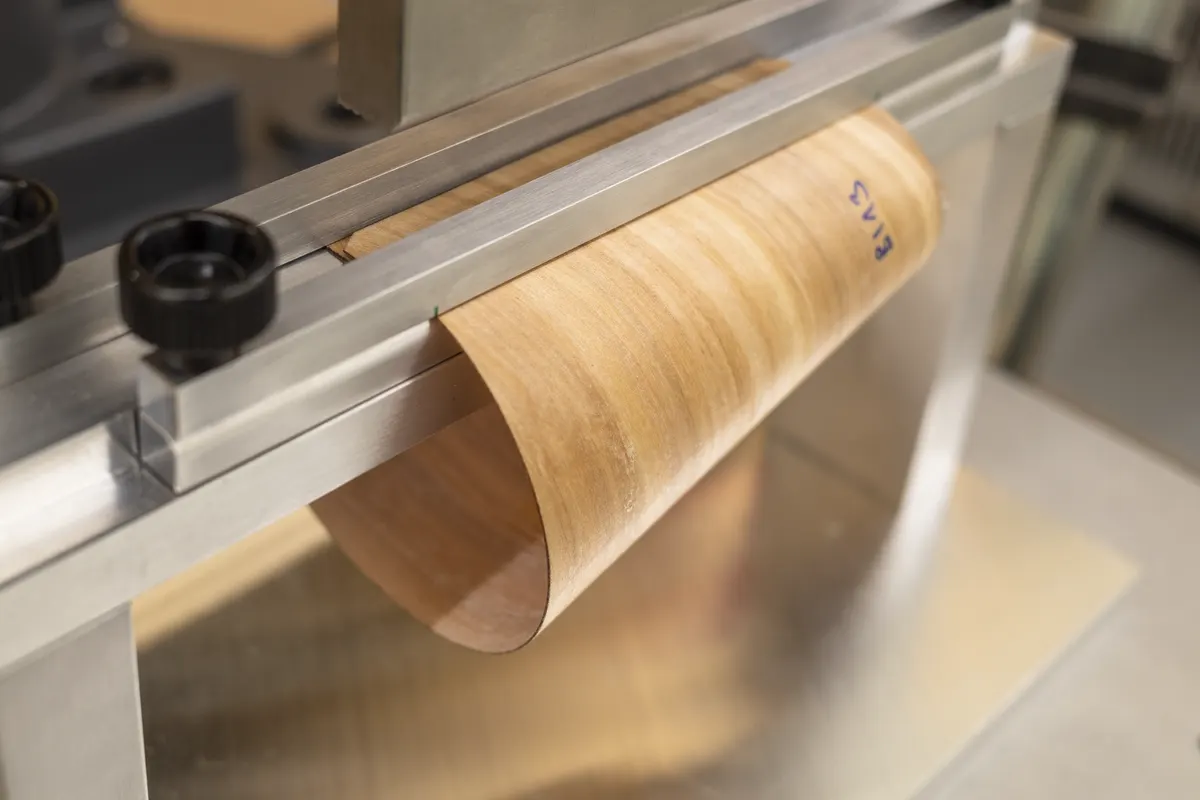
But we didn’t give up that easily, and we continued prototyping, testing, and exploring. Eventually, we created two processes, one to homogenise the surface of the veneer and the other to create a watertight seal with the base of the cup. In addition, we also have the option to apply a biodegradable coating to the veneer, which would still enable the cup to be 100% compostable.
Ultimately, we’ve achieved our goal:
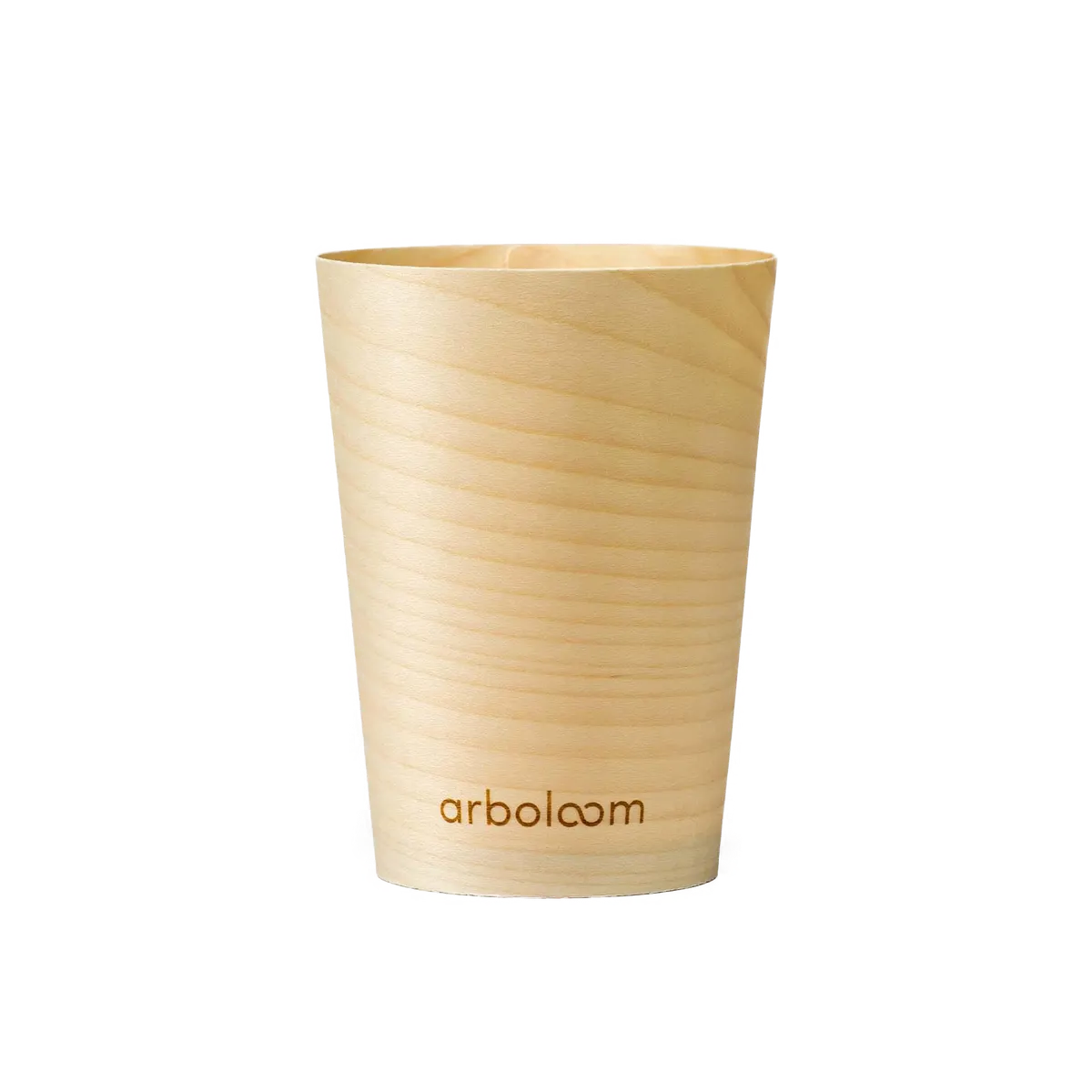
A disposable, and watertight, cup made from a wood veneer, a material that’s possible to grow and source locally.
Created with minimum production processes and material transportation, thus with a significantly lower carbon footprint than a comparable paper cup.
A new spin-off has been born
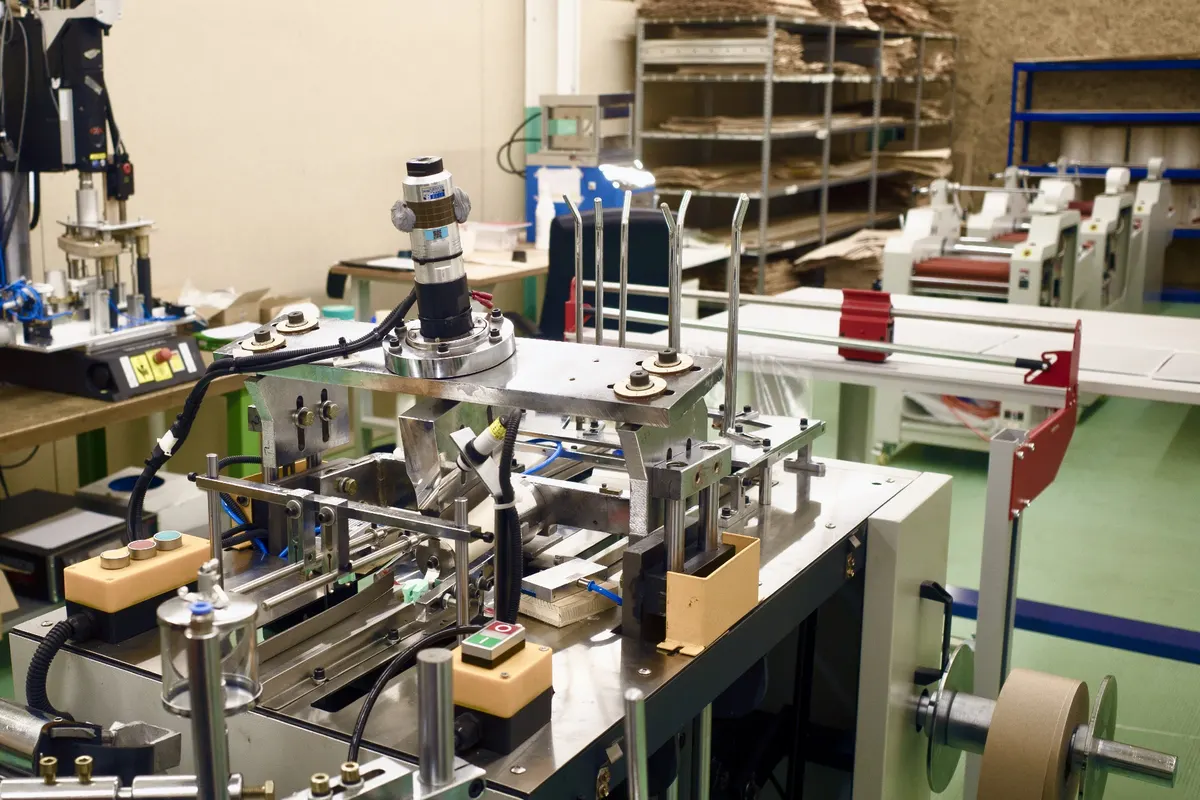
So far, all our designs, prototypes and tests have been achieved by a small, dedicated team utilising repurposed machines with some hand finishing. We’ll continue with this approach to design and test new ideas. However, we have also acquired a small industrial unit with more advanced machinery and are aiming to have a production line in operation in 2022.
In addition to going ahead with high volume production, we’re also prototyping and testing a lid solution that has the same eco credentials as the cup. Furthermore, our future clients are also asking about how we intend to apply branding and graphics. Obviously, we don’t want to compromise the low carbon footprint we’ve already achieved, so are hoping to utilise hot stamping or laser engraving/burning.
In the meantime, we have also spun off a start-up to continue the development and commercialisation of the cup, and other future products. For more information, check out this article in the Bieler Tagblatt (only available in German) or have a look at their website.
Do you have a similar challenge?
Are you inspired by this case study and interested in discussing a similar collaboration?If so, then reach out to one of our experts!