Background and Challenge
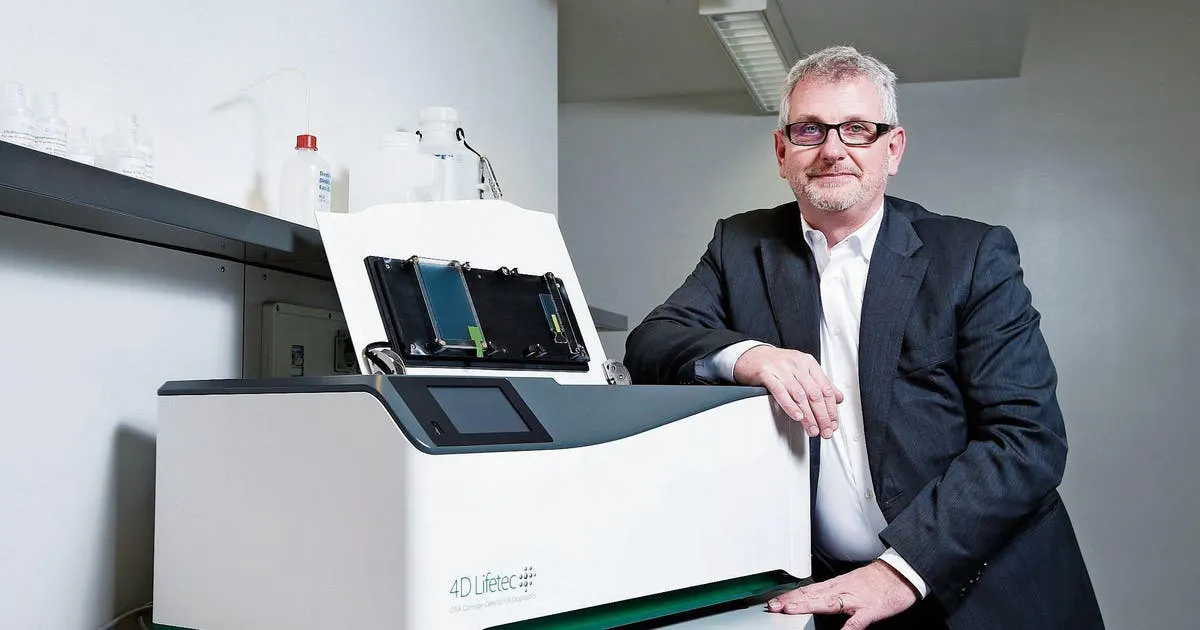
4D Lifetec is an innovative Swiss start-up founded in 2014 by Dr. Arne Faisst and Nick Mijnssen. Their vision was to create a breakthrough in large-scale early cancer diagnostics. Creaholic helped them develop its proprietary and fully patented 4D Lifetest™ Device for the early detection of cancer based on a new innovative biomarker and liquid biopsy technology. The assay has been successfully clinically tested and shows an unprecedented potential in the early detection of cancer. The first application has now received theCE mark for the use in personalized lung cancer diagnostics.
4D Lifetec came to Creaholic with an early prototype of the 4D Lifetest™ device. The prototype was showing first promising results of the technology but was still very large in proportion and not optimal to use. They gave us the challenge to support the engineering team with the overall set up of the product and its usability, the product design, the user interactions, and the graphical user interface.
Valuable Insights
Compared to the existing comet assay process where single to a few tests were done by a lab professional one at a time with pretty basic equipment, 4D Lifetec’s technology was a huge step towards more consistent results with up to 288 samples in a single test run. With this the costs for comet assay tests can be reduced, the reliability of the results improved and the chance of early detection in more people that will hopefully lead to better treatment outcomes.
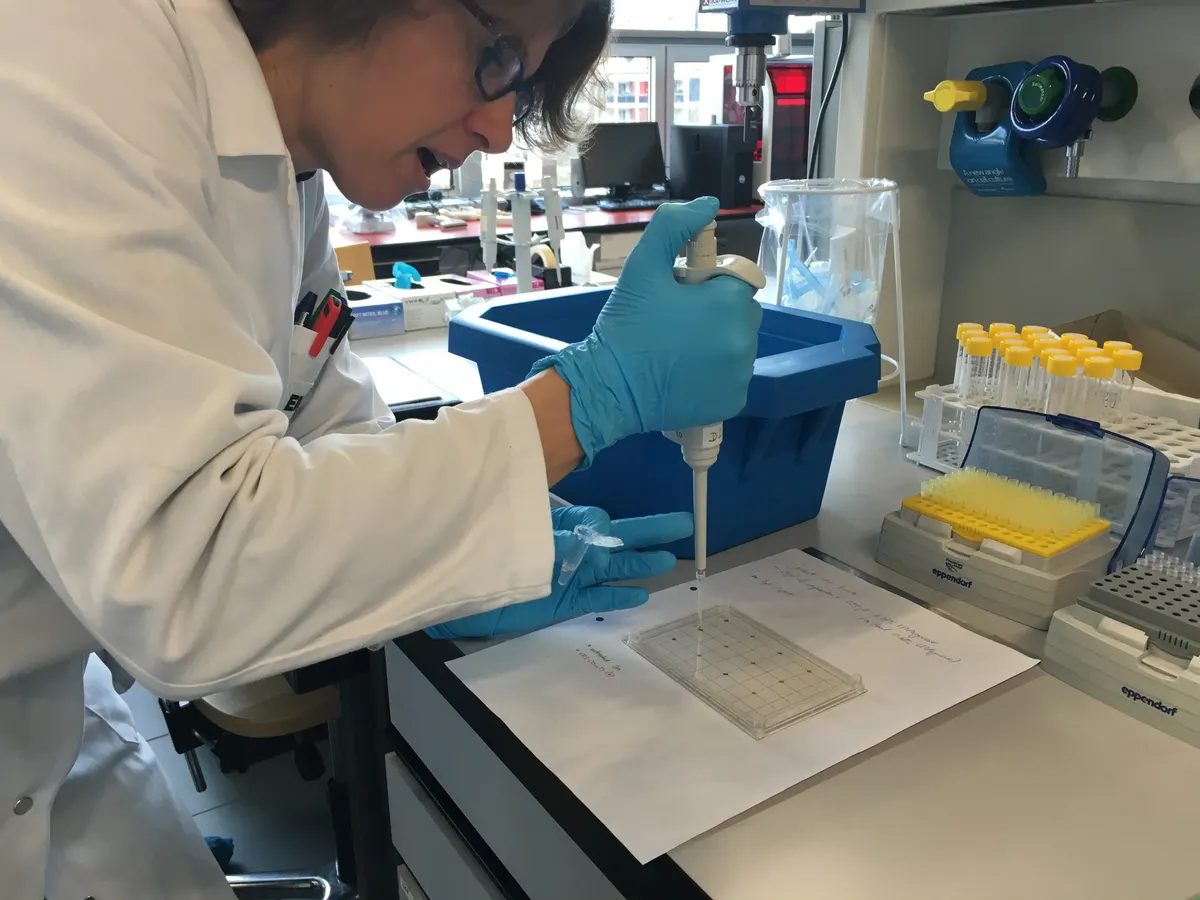
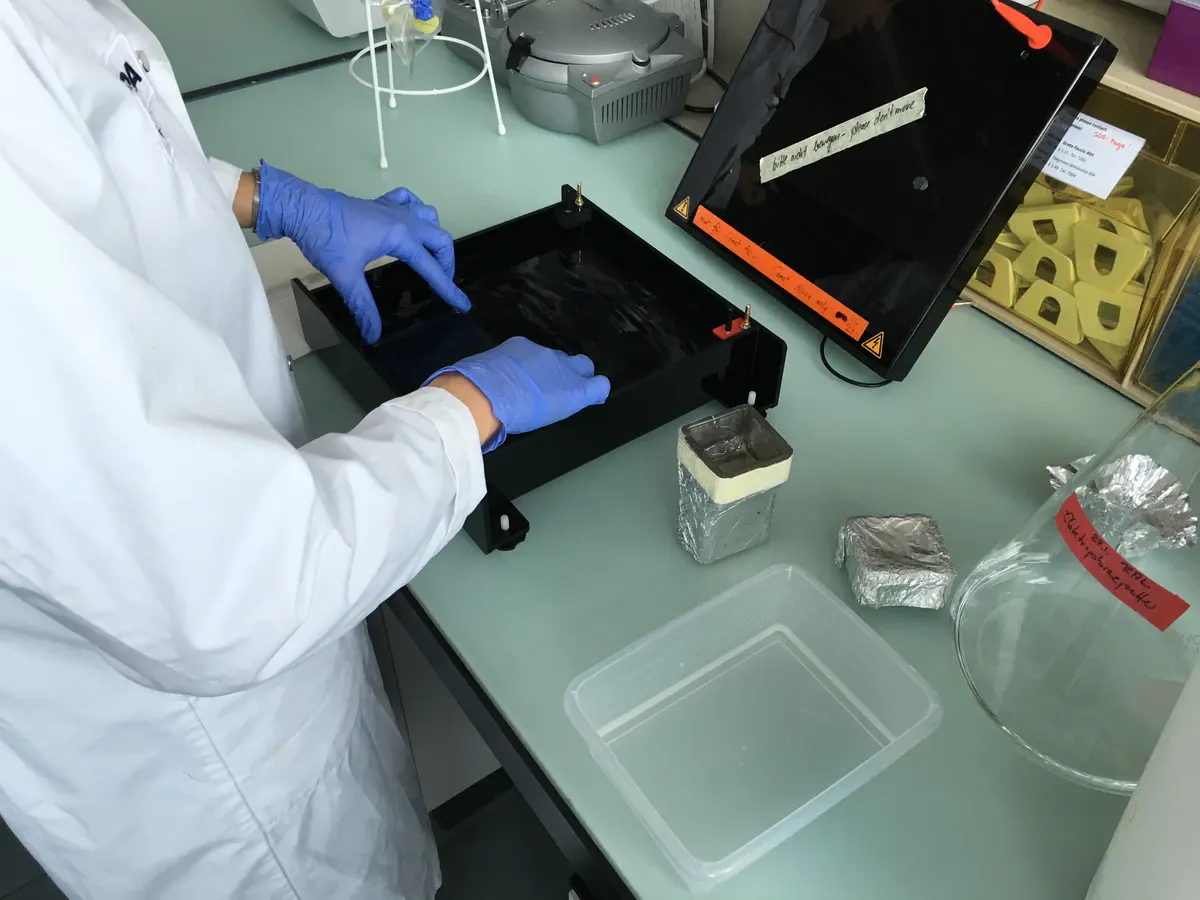
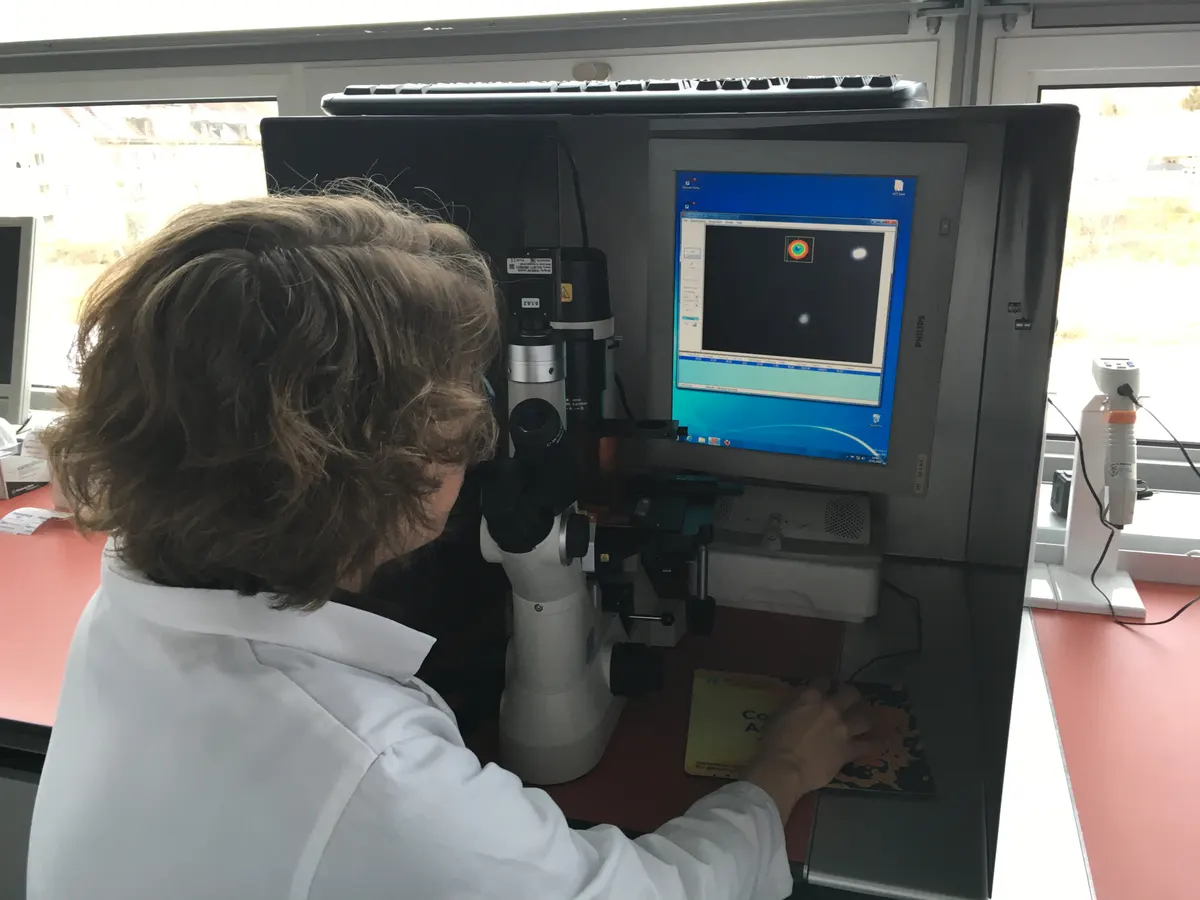
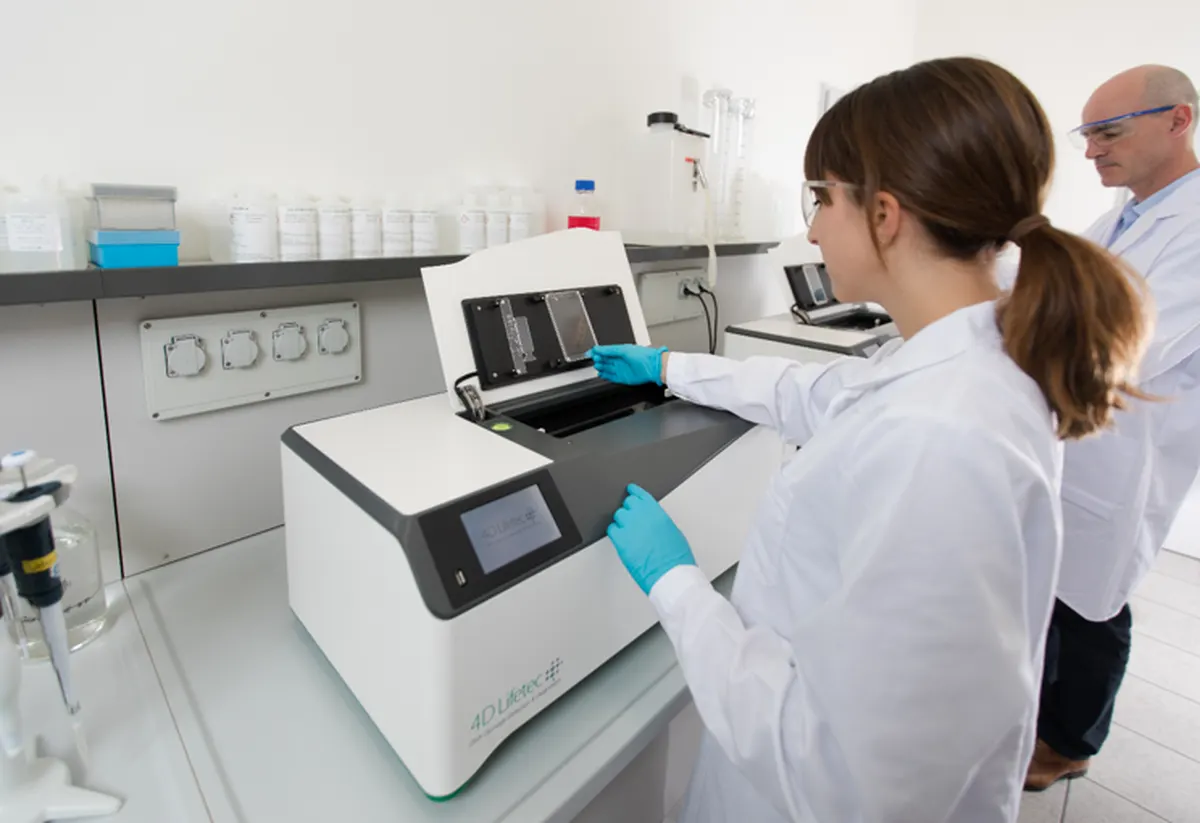
We started the project by visiting a lab at the EMPA that was working with the comet assay process, seeing how it is used and interviewing lab professionals about their needs and the context of the process. This gave us important insights for the development.
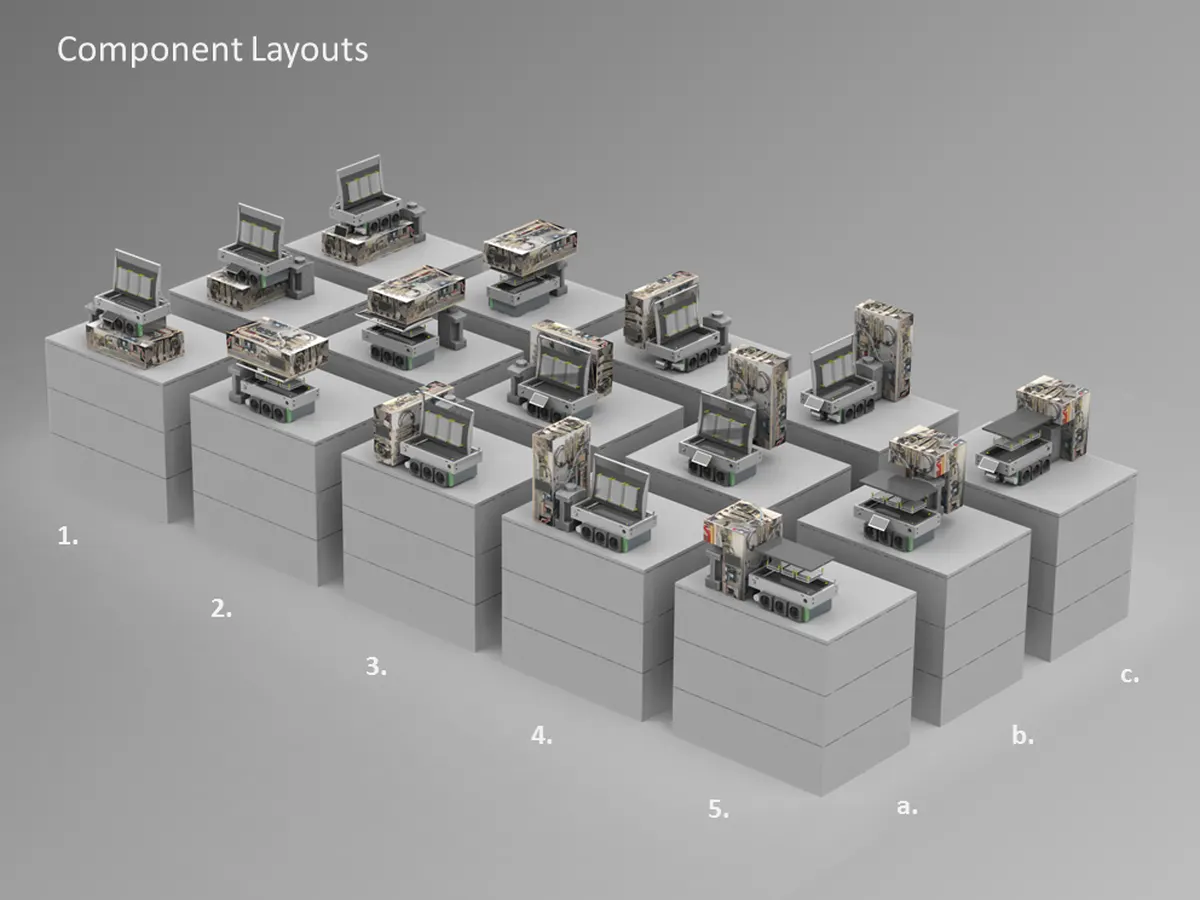
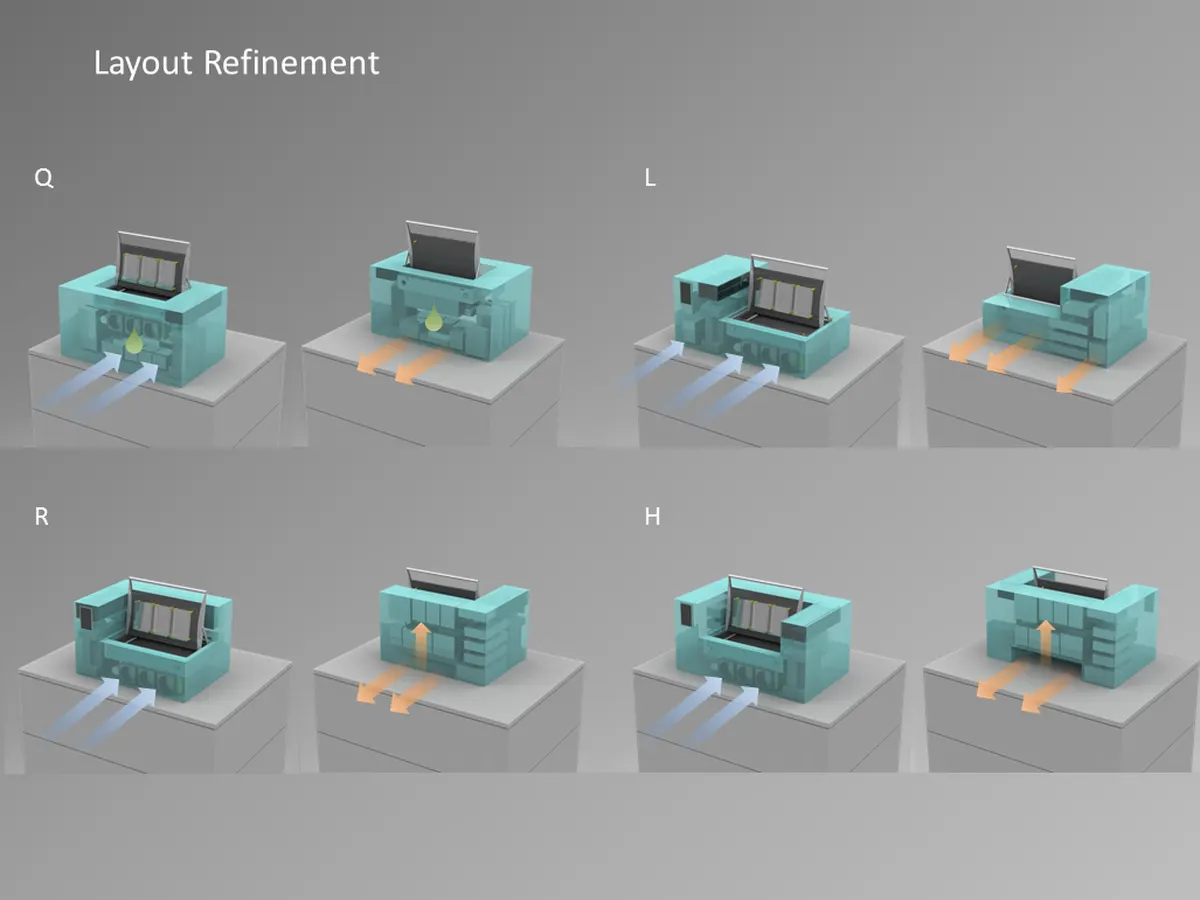
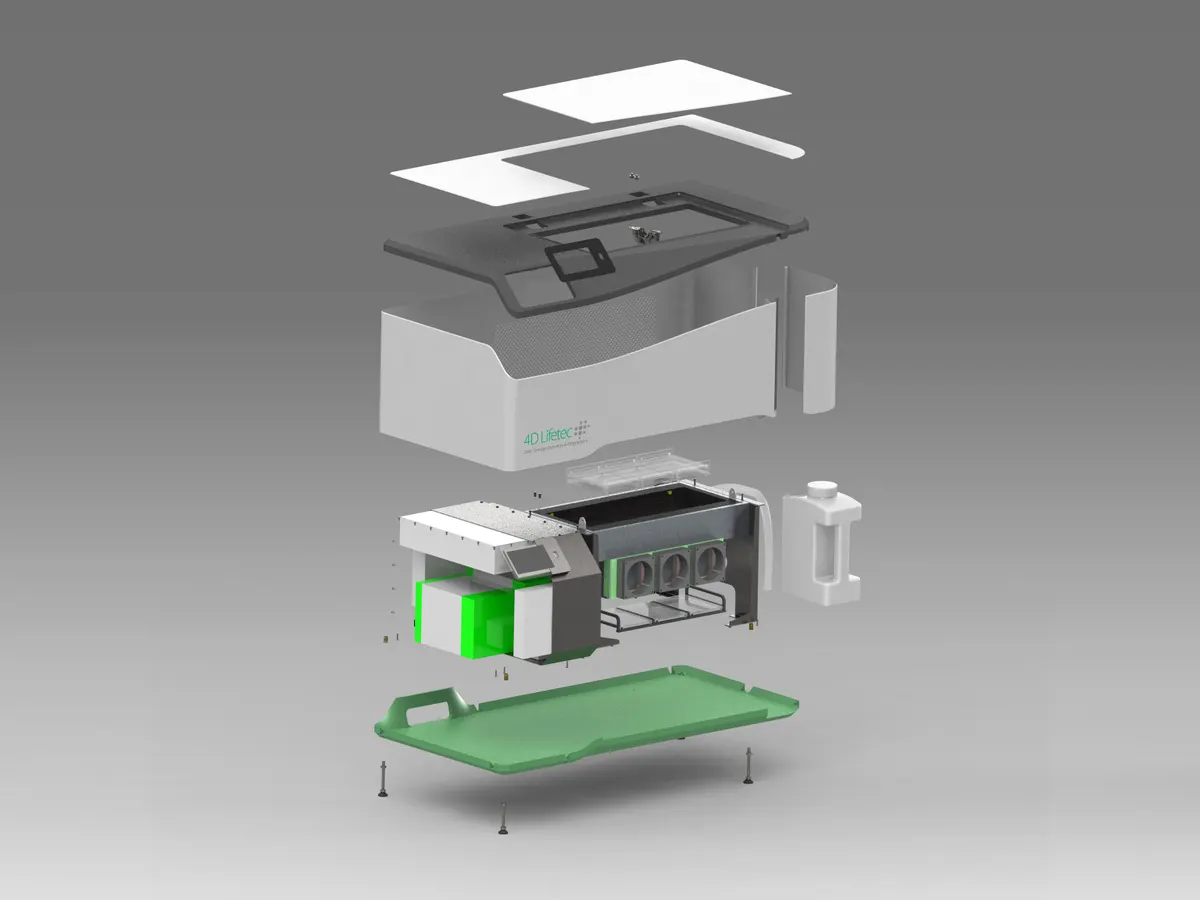
Back in the office, we dealt with the operating ergonomics of the screen, the test tub, and the liquid canisters. While considering the shielding of the electronic components and sufficient ventilation, we laid out and visualized various possibilities of the component assemblies that we then evaluated with the team.

Product Development and Design
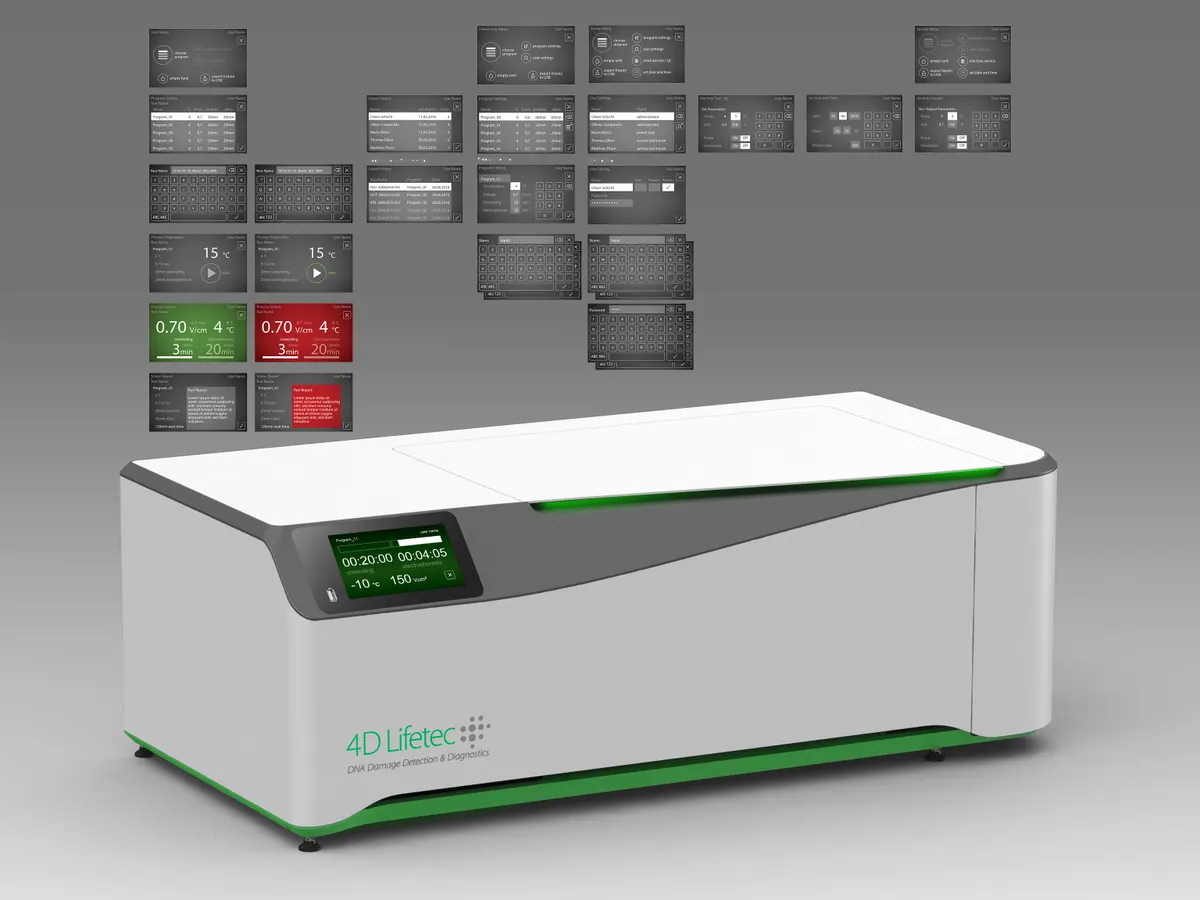
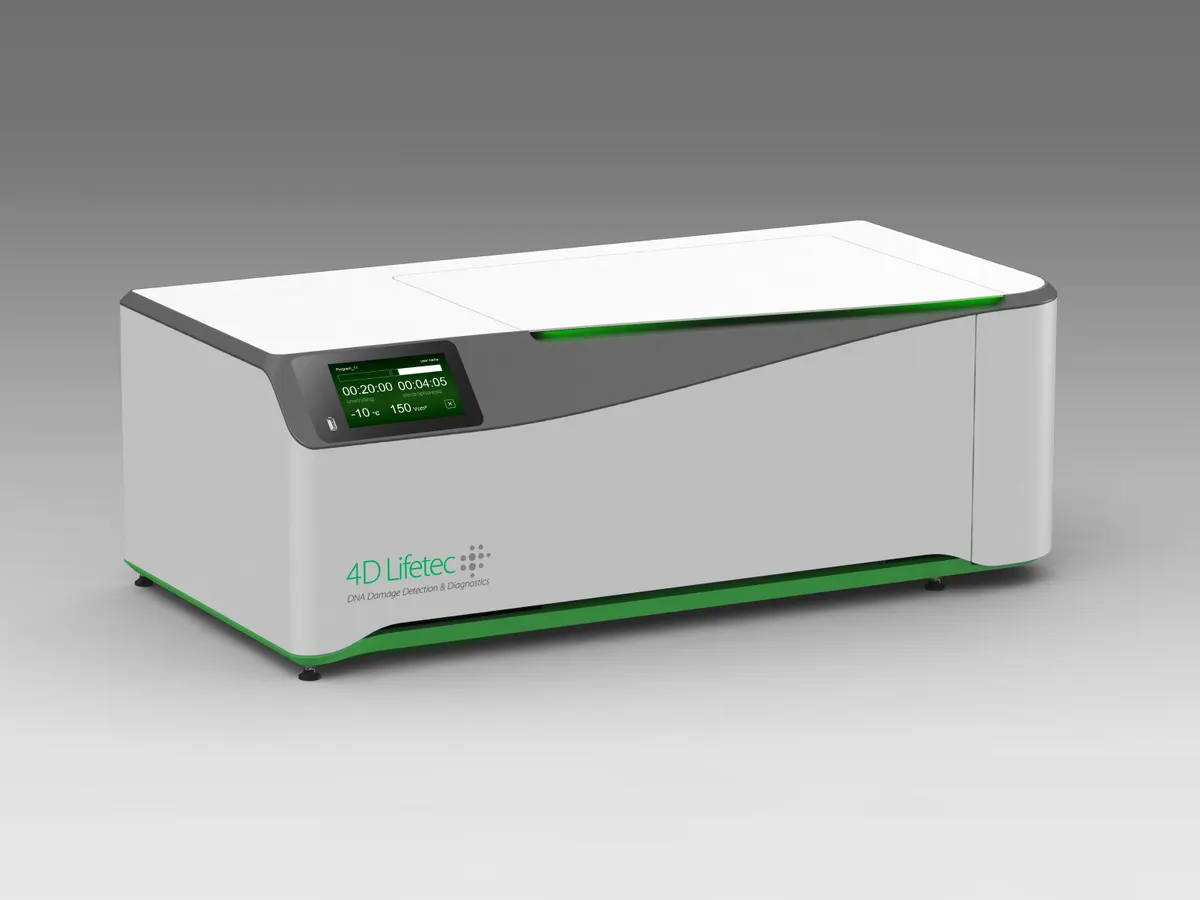
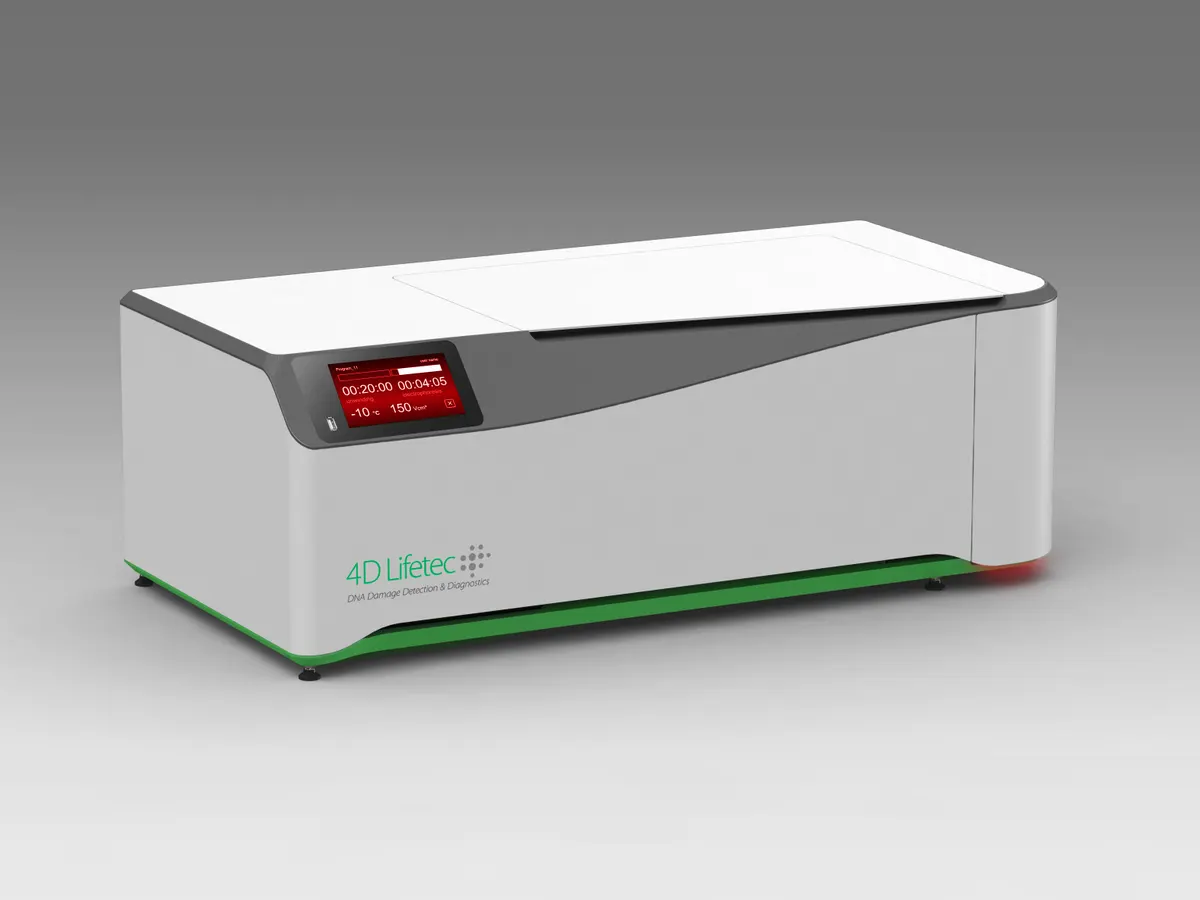
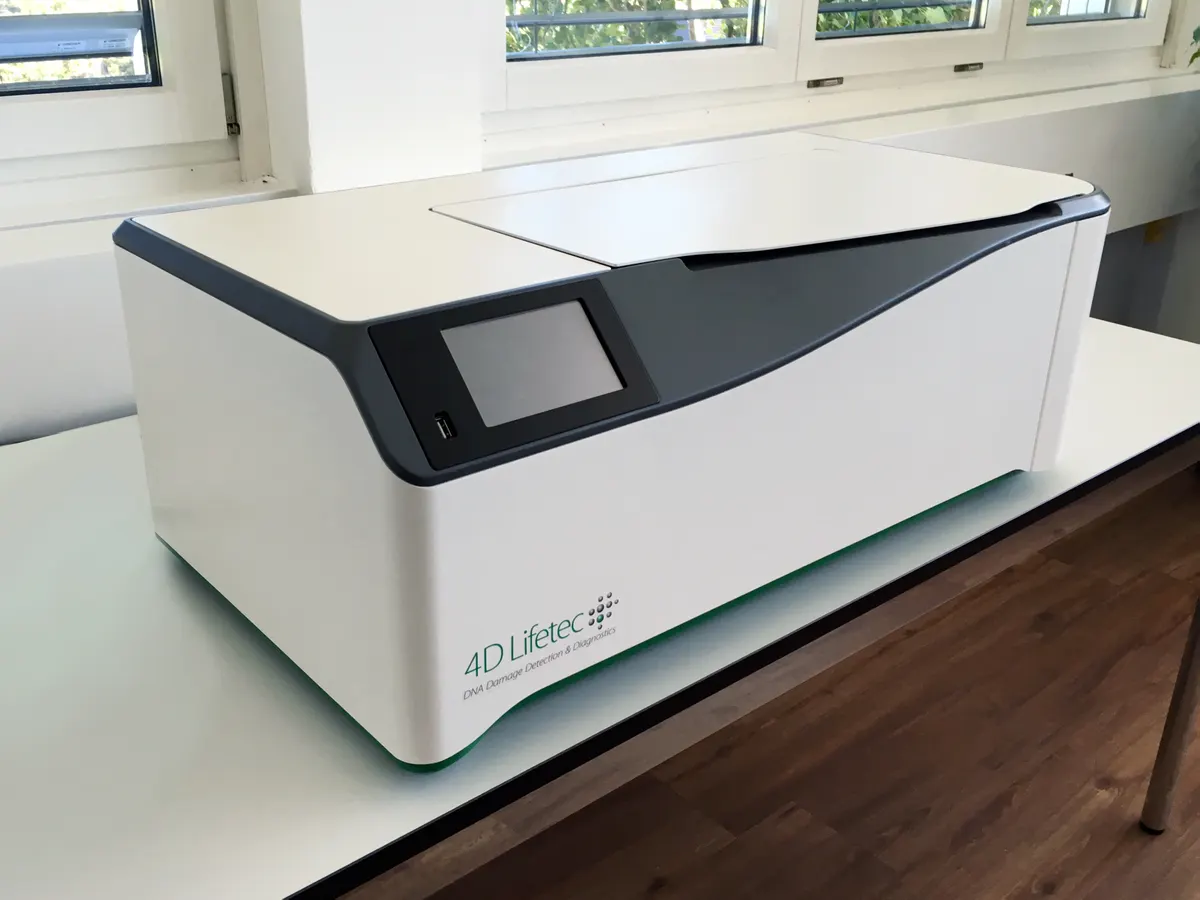
In terms of the product design, we wanted to look for subtle clues that could give a reference to the comet assay process without being too literal. We found one in the asymmetric positioning of the display with the slow surface transition that resembles the tail of a comet assay. As the interaction starts with the display, then leads to the testing tub and finally the liquid canister at the end this all made a lot of sense to us.
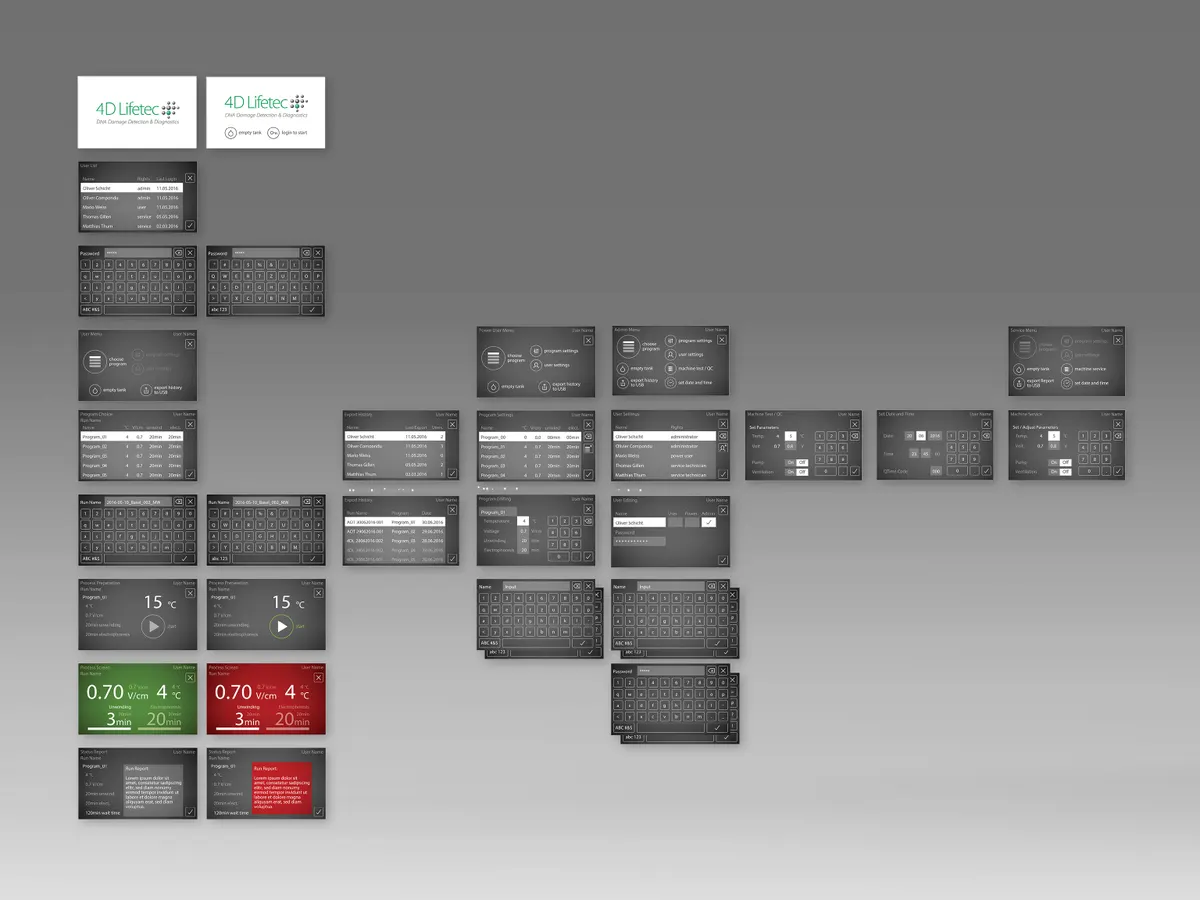
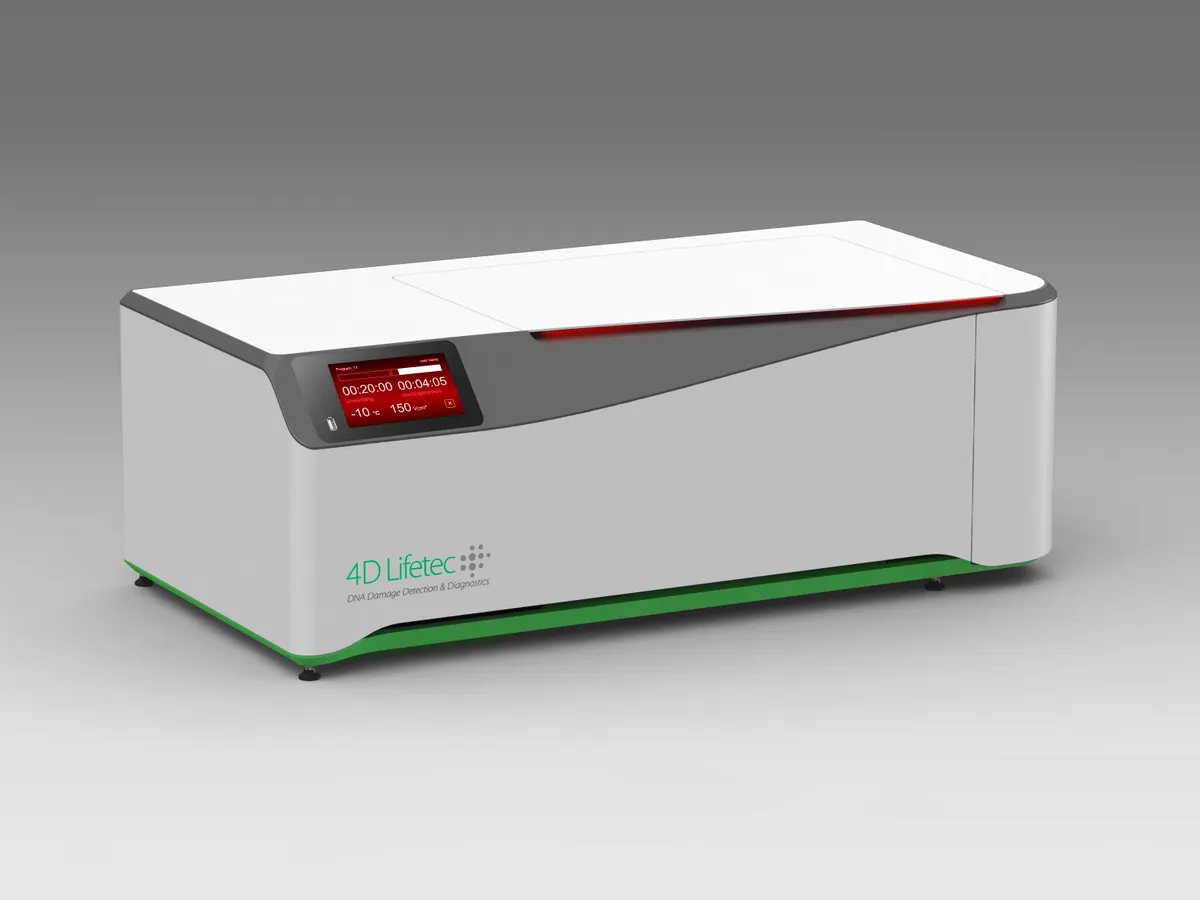
One of the insights from our visit to EMPA was that a lab professional will set up the test and then go on to do other work. For this reason, we decided to design the user interface with high contrast grey tones with only the most important information displayed largely on the screen. We then let the screen background light up green when the process is running and red when an issue occurs so that it is visible from far if there is an issue. We also implemented LED lights on the device itself to indicate the area with the issue.
Results
Due to the regular and open exchanges between the teams we were able to rapidly leverage each of our specific know-hows to produce and share results and get to a solution quickly.
We were proud to hear when 4D Lifetest™ received CE approval, because this means early cancer diagnostics will make a huge leap forward and more people will have better chances at healing their cancer and living better lives.

Do you have a medtech challenge, too?
Are you inspired by this case study and interested in discussing a similar collaboration?If so, then reach out to one of our experts!