At Creaholic, we see Voice of the Customer tools not just as technology, but as part of a holistic approach that takes customer experience to the next level. It’s not only about collecting feedback, but also using this feedback to fuel valuable actions that move your organisation forward. In this article, you’ll discover what you should consider to use a VoC tool in a way that advances your business.
Let’s explore how you can go beyond collecting feedback and enable true customer centricity.
Voice of the Customer as a reliable guide
In a world where understanding customer behaviour is critical, the voice of the customer has become a vital input for organisations seeking direction in a competitive market. As someone who is involved in or responsible for customer centricity, you know how important it is to have a deep understanding of how customers experience your products, services and touchpoints.
More and more organisations are recognising the value of VoC tools and are integrating them into their systems. They are seen as the link between customers’ needs and the strategic decisions that determine business success. The real challenge is not only collecting data with these tools, but structuring data in a way that it can be used to make informed decisions.
Introducing a VoC tool is only one step. True customer understanding depends on how the data is used. A VoC tool must be more than a source of feedback – it has to translate the voice of the customer into a language that the whole company speaks and understands.
At Creaholic, we recognise this challenge and have helped teams lay the right foundation for VoC and implement the tool as an integral part of their business strategy.

How to build the right data structure for customer experience management
When it comes to customer data, structure is everything. Let’s look at the basic framework that can make all the difference: the data model. It should be a model that doesn’t get lost in numbers, but provides answers to the questions you should be asking. Questions like: what does the data tell us about our customers? And: how can we use these insights to improve the customer experience?

Here’s an approach to developing the right data structure:
1. Frame: Selecting and setting parameters of measurementsA customer’s experience is always made up of intent, products, services, touchpoints and processes. Which customer experiences or lifecycle phases should be covered by your VoC tool? Which combinations of intent, products, touchpoints and processes should be taken into account for your voice of the customer measurement?
2. Collect: Compiling existing data and feedbackStandard quantitative measures like tNPS, CSAT and CES exist alongside qualitative insights gathered from customer comments and feedback. What is currently being measured, and what data is already available? What raw data and reports exist?
3. Analyse: Reviewing and selecting existing dataSome data is collected periodically or continuously, while other data is measured using surveys as needed. What conclusions can you draw from the data to answer your VoC questions? What data is relevant, and what can you disregard?
4. Develop: Structuring the journeyA customer journey maps the specific steps of the customer experience from the customer’s perspective. A lifecycle journey is more abstract than a customer journey and describes the customer’s progression through phases. What level of detail suits your VoC research? What are they key steps or phases in the journey? How can these steps or phases be accurately described?
5. Map: Mapping data and identifying gapsData can be used to measure the performance of the journey. For which steps does data already exist? What gaps are there in the big picture? What needs to be measured or collected again?
The resulting model serves as the backbone of your VoC tool. The model is necessary because it ensures that the structure is mapped in the tool and that both new and existing data points can be effectively integrated.
We believe that customer experience is not a one-off task – it’s an on-going project. The journey begins with this model and will ultimately lead to the question: who is responsible for handling problems when they are discovered? After all, collecting feedback only makes sense if it leads to change. In this context, we talk about “closing the loop”. This can mean a concrete response to a real customer with feedback; or in the case of recurring problems, adapting systems, processes or user experience.
By taking these steps, you can bring your organisation closer to your customers and build loyalty.
Customer journeys reimagined
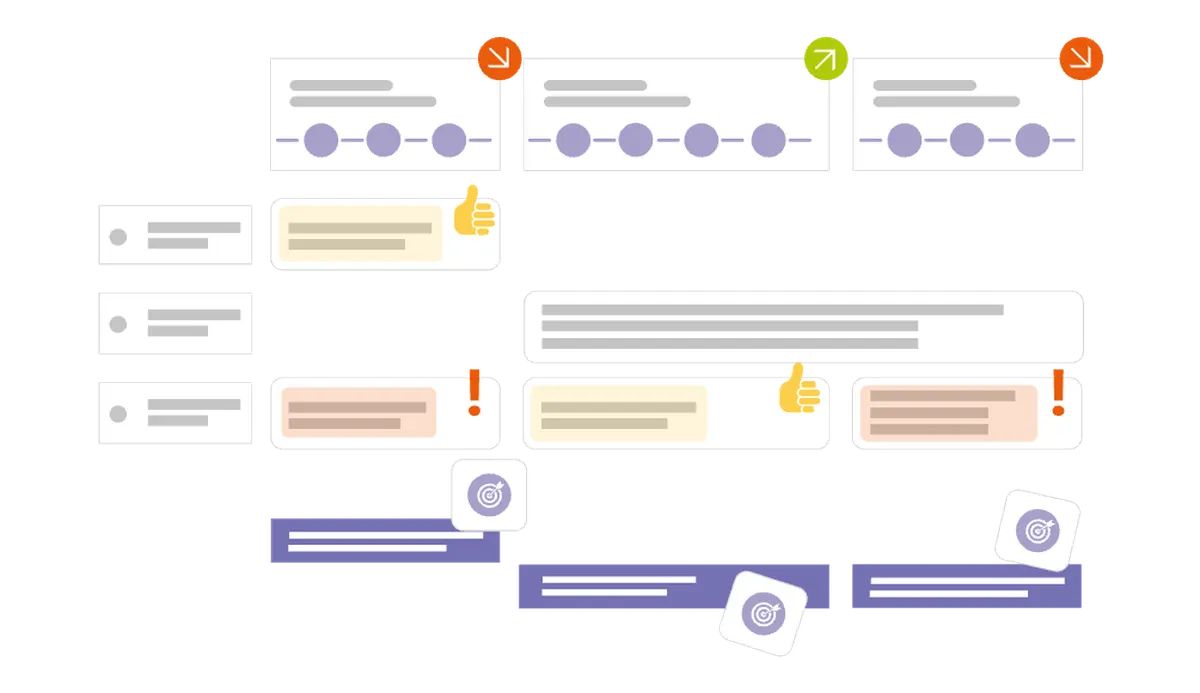
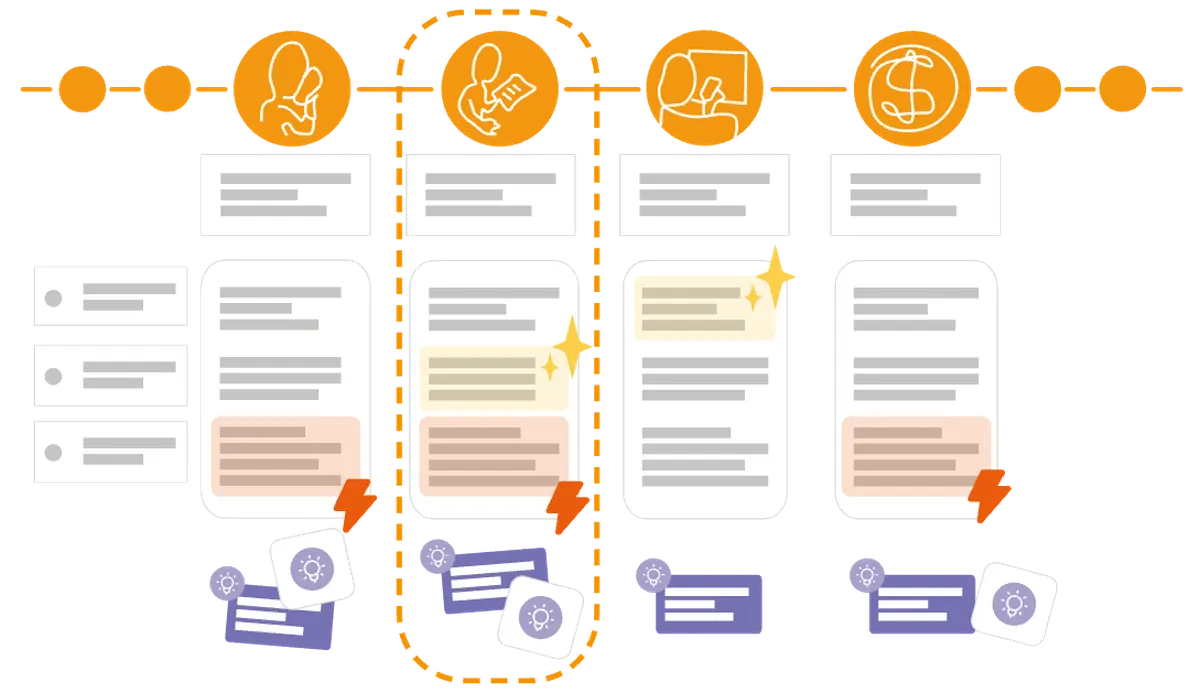
Building customer centricity is a dynamic process that requires constant fine-tuning. At Creaholic, we know that the customer journey is more than just a nice visualisation – it’s a powerful tool that we divide into two key uses:
1. Journeys to manage
The aim in this case is to use the customer journey or lifecycle journey as a management tool. We help you understand the multi-layered paths of your customers and make strategic decisions based on this understanding. It’s an approach that uses customer voice as a navigational aid to course correct and ensure business stays on the right track.
2. Journeys to optimise a specific customer experience
This type of customer journey focuses on optimising specific points of contact with the customer. Together, we analyse how your organisation’s customer experiences are designed. We also look at the “micro-moments” that can trigger enthusiasm or prevent disappointment. We identify where there is potential for improvement, redesign the experience and validate possible solutions.
You can see a good example of this in a use-case presented with Swisscom.
Our approach at Creaholic involves using these two methods to build a bridge between the strategic and operational levels of implementing customer centricity. We not only show you how to use the voice of the customer as a basis, but also how to design the journey in a way that creates real value.
Beyond metrics: Your path to customer centricity
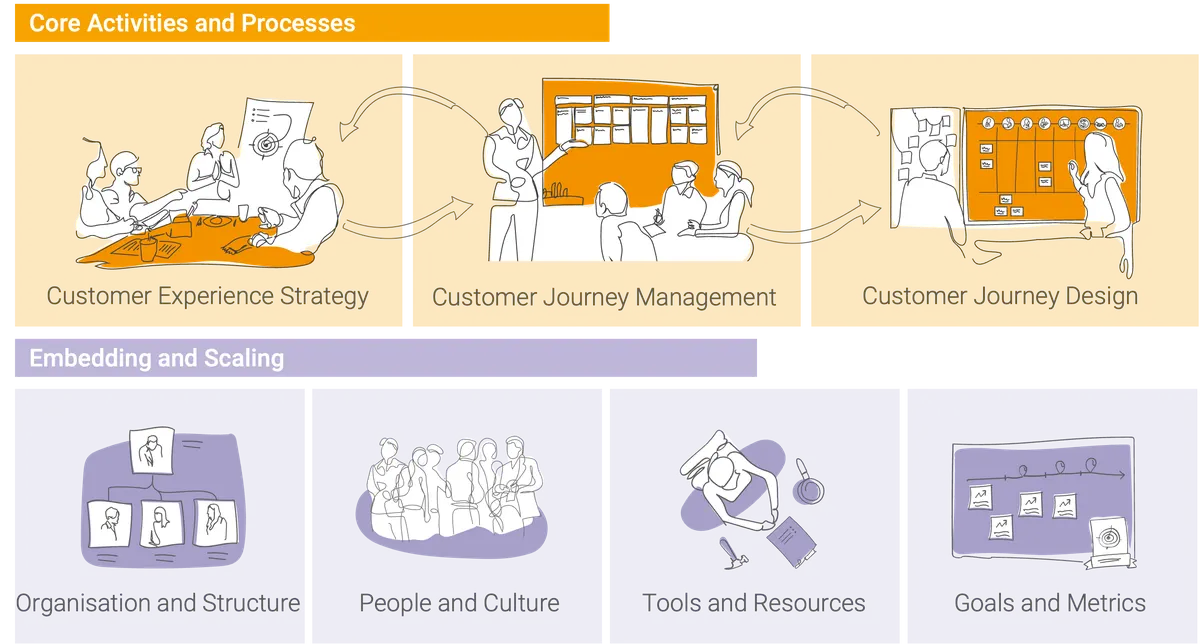
The journeys you create are far more than simply steps on a path. They are part of a comprehensive customer experience management strategy. A Voice of the Customer tool helps you hear what customers are saying, which is just one way to improve how they feel about your services or products. Using the output of this tool in combination with other insight to make your customers’ experience better is essential to ensuring they keep coming back – and attracting new customers. The real win is when you truly understand your customers and keep making things better for them by continuously improving their experience.
When we work with clients on their customer experience management activities, we use the positive impact of customer-centricity on their organisation’s bottom line as a key driver for establishing and expanding CEM. This allows company leadership to appreciate the value of customer focus and to relate efforts to outcomes. In our CEM Practical Guide, we illustrate how you can present a cause-and-effect relationship between journey optimisation and economic impact to get internal buy-in for your CEM efforts. This download features a clear guide complete with background information and a real-world case study using Instagram.

Want to take your customer centricity to the next level?
Our expertise ranges from developing customer centred products and services to the creation of process that ensure the customer perspective is considered in every business decision. This holistic approach helps you hear your customer’s voice and act accordingly – and this paves the way to success.