Two steps that are often skipped in early-stage innovation are patent research and thinking about a patent strategy. Developing a new technology without exploring what patents already exist can often become a waste of time.
This lack of knowledge can put a stop to innovation when resources have already been invested. On the flip side, owning a patent gives a company the ability to thrive while they have exclusive use of the technology for up to 20 years.
Since patents have a time limit, it’s crucial that the patented tech is continuously re-evaluated and evolved so that exclusive use can continue beyond 20 years.

Innovation strategy vs. patent strategy
A patent is more than securing intellectual property for the next 20 years. Patents should be a part of an overall strategy, not something that can be simply checked off a to-do list. Using a broad perspective, an R&D team can boost its innovation strategy by exploring the potential a patent has and innovating accordingly. The key is to consider future trends and proactively protect the invention in line with the evolution of technology and markets.
Before you can have a patent portfolio, you need to have a patent strategy. A strong patent strategy requires understanding that the process isn’t over once the patent has been granted. According to Mars Aeschlimann, Chairman of Creaholic’s Board, a patent strategy should be reviewed every nine to 12 months and adapted for changes in trends, opportunities and new developments. In fact, Mars advises companies to dedicate up to 5% of R&D budget to create and maintain an active patent portfolio.

A quick guide to the patent application process
The process of securing a patent for an innovation can take three to five years. It requires that an invention meet three requirements:
Novelty: The idea must be new when you submit it. If you already sell the technology or innovation, made it publicly available, revealed it at a trade show or if an identical option is already on the market then it does not qualify as being a novelty.
An inventive step: If an innovation is considered to be a novelty, the next question is if there is an inventive step. The product or process must involve a non-obvious solution.
Industrial applicability: The innovation must be capable of being made or used in any kind of industry.
Eighteen months after the application is submitted, it is published in patent databases. If the company requests it, the “examination” period can begin two and a half years after the application has been filed. During this stage, the innovation team receives examination results from the patent office from the country where the patent was filed. The team will then have to respond to the examiner’s questions, observations, objections or warnings of rejection. When there are no other findings that prevent a patent from being granted, the examination will be complete.
A patent can be maintained by a company for 20 years. After this time, the technology becomes part of the public domain and anyone can use, duplicate or sell without violating any laws.

The power of a digital patent database
Just as seeing what isn’t in the database can lead to new ideas, seeing what is in the database can be just as valuable. Today, the process of researching patents and what already exists is quicker and more efficient than it was in the past. That is thanks to digitalisation. Mars tells a story of when he and Creaholic founder Elmar Mock had an idea for a new condom design.
It took weeks for them to find out that the exact same design had already been patented – but never actually presented to the market. If the idea had come to them today, they could have used an online tool to find out that the design didn’t need any more of their energy.
On the other hand, the information could have fuelled a creative challenge to find a new solution or a way that the condom design could solve a different technical problem… 🤔

Case study: From the kitchen to the bathroom
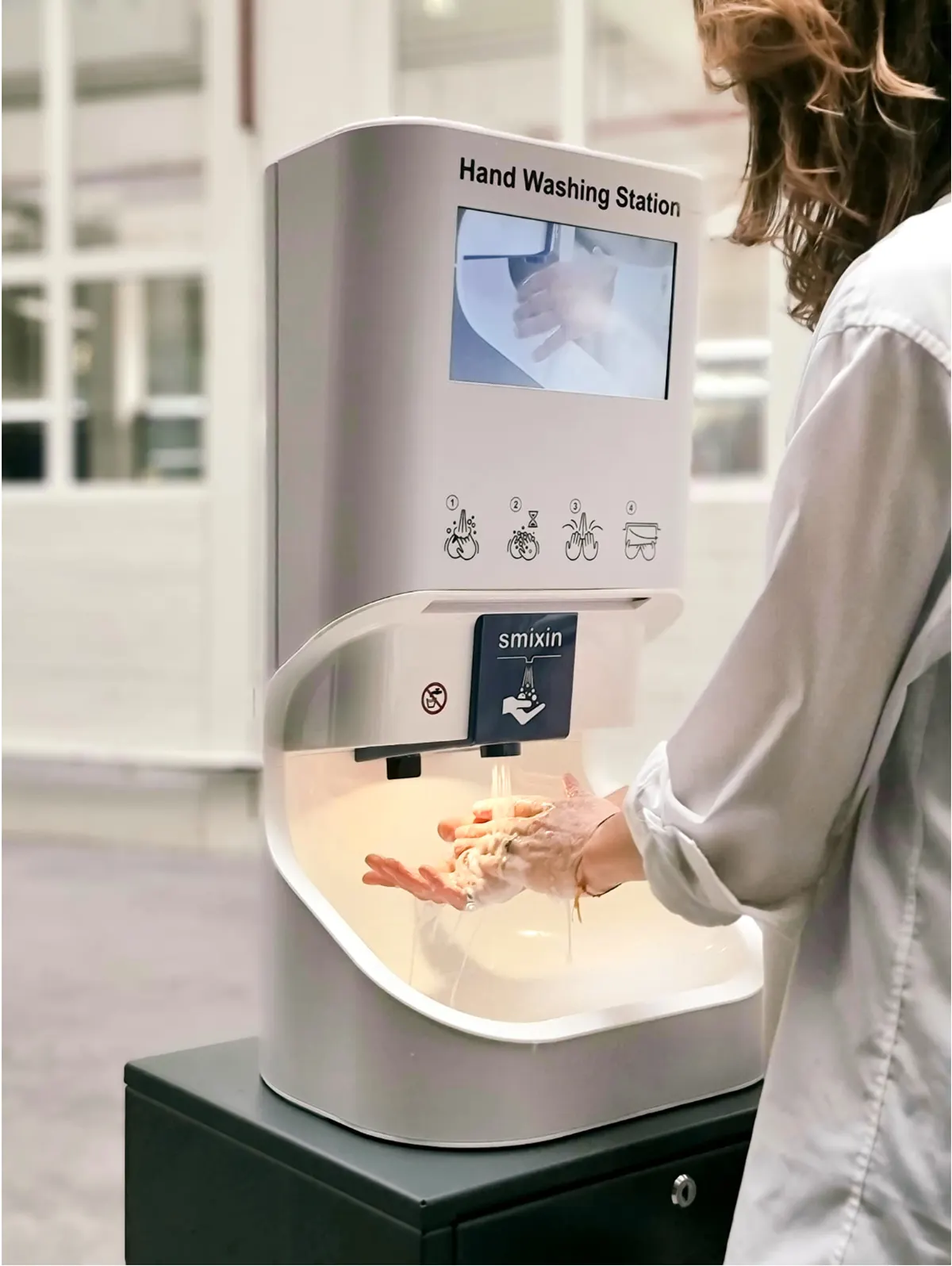
Smixin is a unique hand washing system that saves water, soap and money thanks to patented technology. By mixing the optimal amount of soap, air and water, the Smixin faucets effectively clean hands while reducing the use of water by 90% compared to the conventional hand-washing method.
Originally, this mixing technology was developed with a major consumer goods company for a completely different purpose: food and beverages. However, an example of how the technology could be used with soap was also included in the application.
The original Smixin team – a group of Creaholicers – saw an opportunity for an intrapreneurship project. Creaholic received approval from the company to build on its example for the purpose of washing hands in an ecological and hygienic way.
Smixin patented the technology for this area and become a Creaholic spin-off. Today, Smixin faucets are used around the world by customers including the World Health Organization, McDonald’s, the Ritz-Carleton and Genting Cruise Lines.
The lesson to be learned: when inventing new technology – even at early-stage innovation – don’t forget the patent process and work with people who can help you see what else your invention can be used for. And cover that with a patented invention, too.
Expertise in patent research and IP applications
Creaholic’s specialisation when it comes to patents is in finding new ways of doing, thinking and innovating. Not only have we done this through our own intrapreneurial process for innovations like Arboloom and Joulia, but we’ve done it for hundreds of inventions and projects over the past 30+ years. Creaholic has secured over 250 patent families.
Compared to a patent attorney, our team can make the link between patents and innovation faster, we can translate patent language so it’s easier to understand and we can build a strategy with a more holistic perspective. Creaholic can also work with patent attorneys and facilitate the process and review the application. On top of all that, we can challenge an invention to either reinforce it or stretch it, and open up new areas of growth.
What’s more, Creaholic scans the IP landscape for IP or tech within a field at the beginning of an innovation project, which spices up the process with new insights and long-term benefits for our clients.

What are you inventing?
Whether you have an idea, a plan or an existing technology that you need to patent, Creaholic is here to help.
Tell us what you’ve come up with.