The 100 hour "free-for-all"
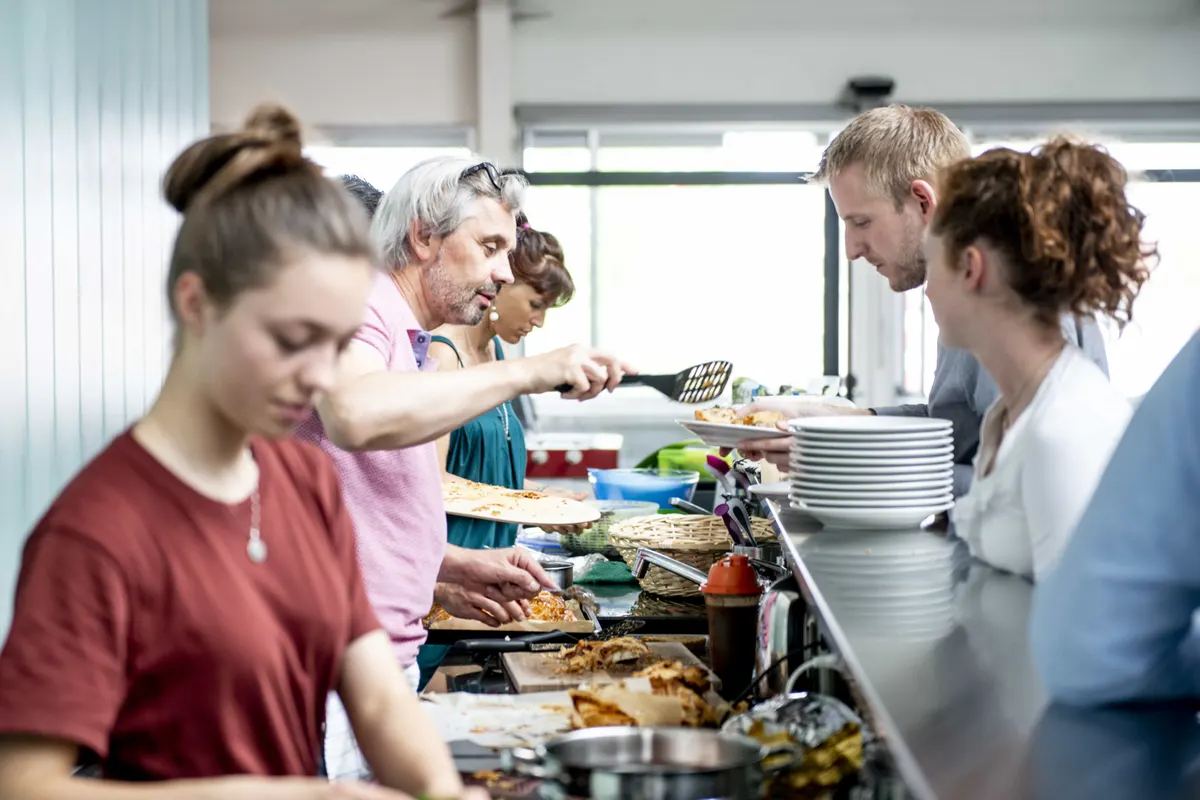
Every Creaholicer is an entrepreneur-and particularly so when we make use of the 100-hour rule. Each one of us can devote 100 hours per year to a project of our own; it doesn’t matter what. Perhaps a Creaholicer will develop an idea that’s been at the back of his or her mind for a long while. And if, after 100 hours, the idea has shown major potential and a concrete business case, we can decide together whether to invest more time and energy into it.
In a best-case scenario, a 100-hour project can result in its own company. And yes, this has actually happened. Several times.
The meeting: Learning from mistakes
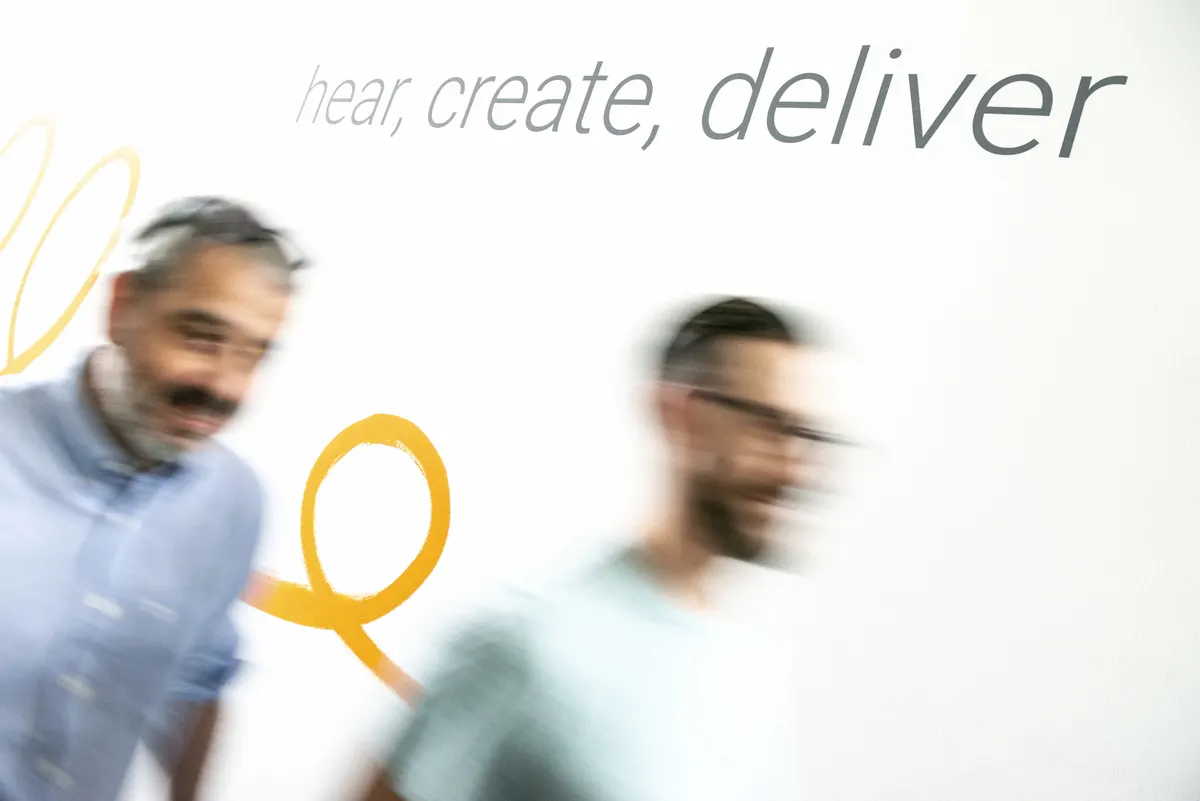
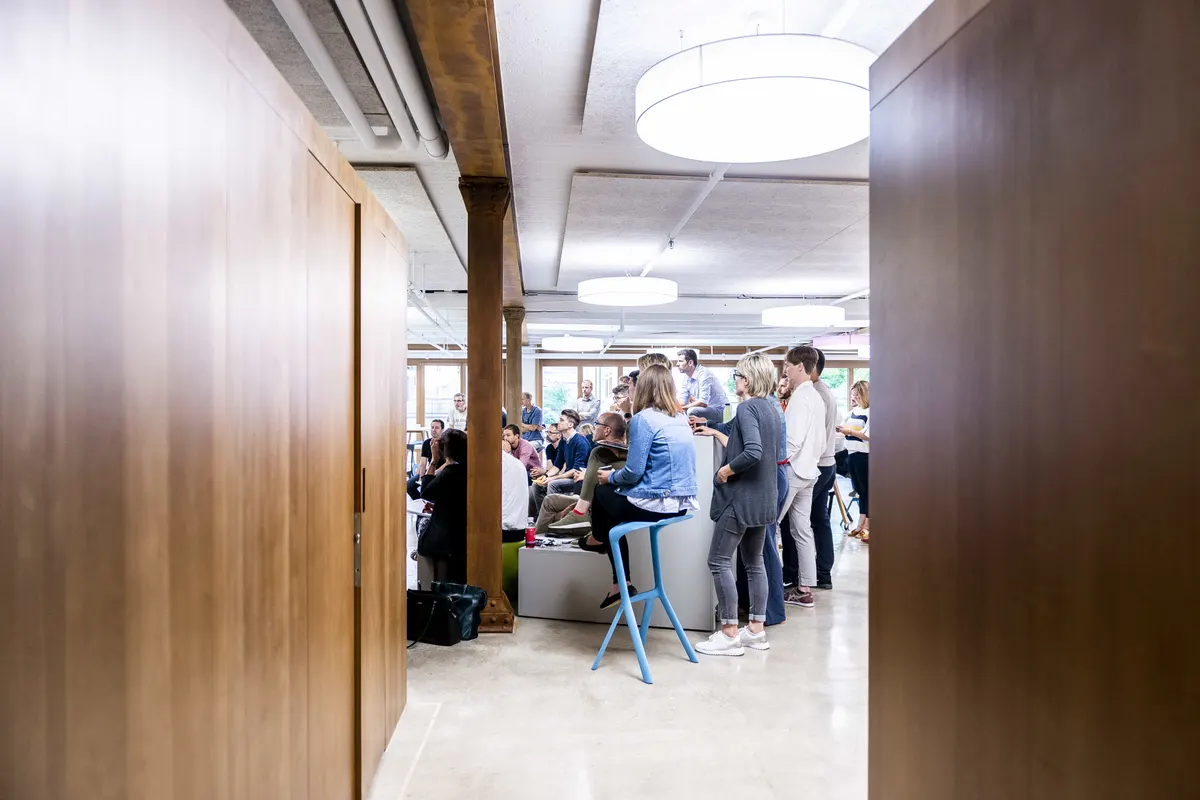
Every other Monday at 8am, all 60 or so Creaholicers gather in a large workshop room for a one-hour exchange of ideas: the Monday Morning Meeting (MMM for short).
Of course it’s true that meetings with more than 60 participants can quickly devolve into a “needs must” sort of event. But we use this ritual gathering for a lively exchange: we report on completed projects, in particular on the mistakes that were made and the lessons that we-sometimes painfully-learned from them.
At the MMM, we also inspire each other to work on a new project. At Creaholic, project teams are gathered, not ordered. And yes, of course, the MMM also touches on financials, internal projects and business updates. Not belaboured and boring, but crisp and creative.
The bell: Rituals may change
When the bell rings, our stomachs growl. No, this isn’t a Pavlovian prototyping project. The bell was first installed in the dining room of the Creaholic offices at the old soap factory in Biel for a very pragmatic reason: the baker’s visit at 10am sharp. Or sometimes earlier. Or later. This uncertainty about when exactly the first longed-for croissant would appear gave us the idea for the bell-if it rings in the morning, the baker is here. No waiting, no unnecessary reconnaissance trips.
Over time we’ve started using the bell more often: for communal lunches, after-work drinks or a solemn farewell to a departing colleague. And since we don’t have a classic hierarchical team structure, collegial exchanges are all the more important. The bell ritual clarifies and promotes these.

Mealtimes together: Cooking up an invention
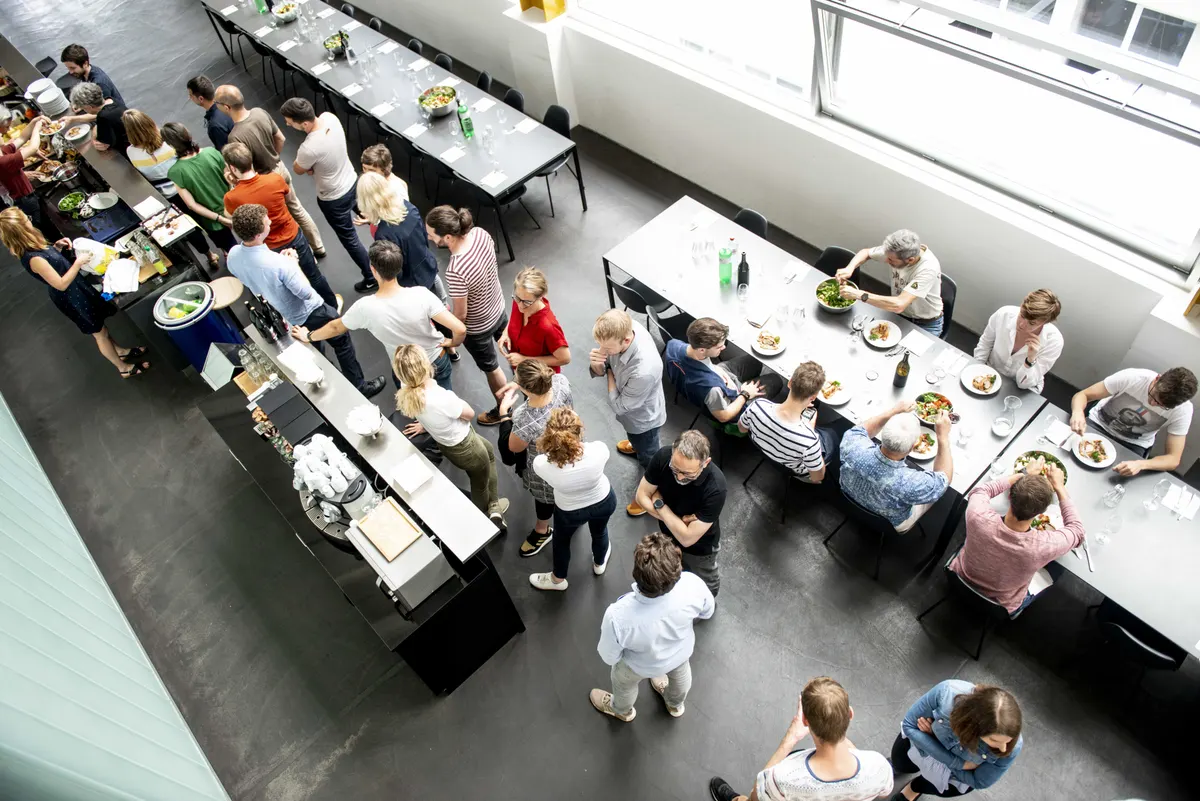
Eating and drinking are often the basis for company-wide rituals-as our bell example shows. At Creaholic, communal cooking is also a central part of teamwork. Small groups tinker with recipes, mingle ingredients and debate possible improvements. Why? Because cooking and invention have a lot in common.
It used to be considered good form to cook for everyone on one’s birthday. Today, with a team that numbers over 60, this is much more challenging than it used to be. That’s why you always find a little group who cook together for their colleagues. This ritual is close to our heart, and it’s one reason why we recently undertook a remodel and expansion of our office kitchen. It makes our shared culinary inventions all the more enjoyable.
Inspiration files, innnovation urns - or just an archive?
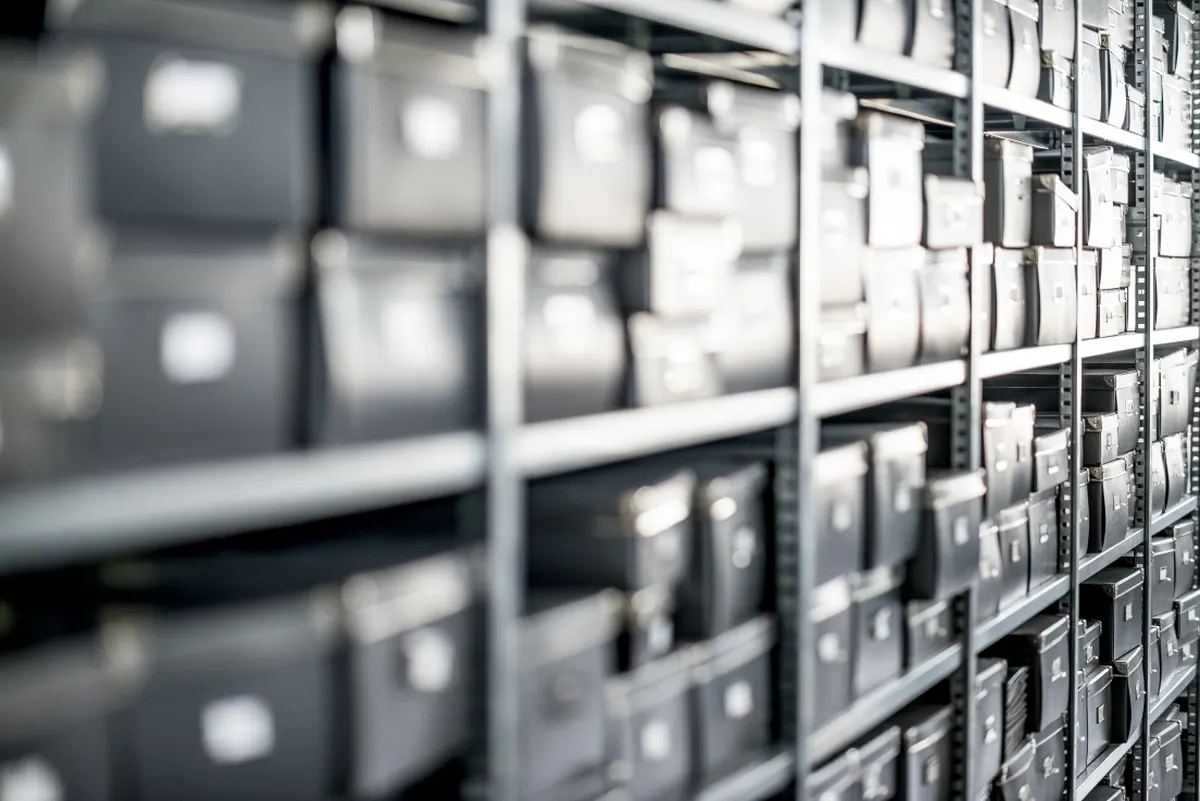
No cubicles here: in our office the dividers between workstations are floor-to-ceiling shelves, densely packed with black boxes. These boxes are filled with the experience and knowledge from more than 30 years of innovation. After a project is completed, its documentation and prototypes are packed up and put in a black box or two.
This means that every day, we always have our past accomplishments in view. We can easily lay a hand on our history, rummage around, and find inspiration for a new project.
The significance of this ritual is different for each and every Creaholicer. Some, in a spirit of reverence, call these “inspiration files;” others prefer the more sober “inspiration urns.” And to many it’s simply the project archive.
The conclusion
Why do we invest so much time, effort and capital in maintaining rituals? It’s simple: we’re convinced that the deliberate introduction and development of rituals is the foundation of a distinctive company culture. At Creaholic, for example, we want to promote entrepreneurship and offer opportunities for interaction in order to complement our flat organizational structure.
The central question is thus: what kind of company culture do you want to promote? With this goal in mind, you now have another pragmatic tool to help you advance in this direction-rituals.
We are here for you, if you'd like to have a partner to develop your new rituals with.